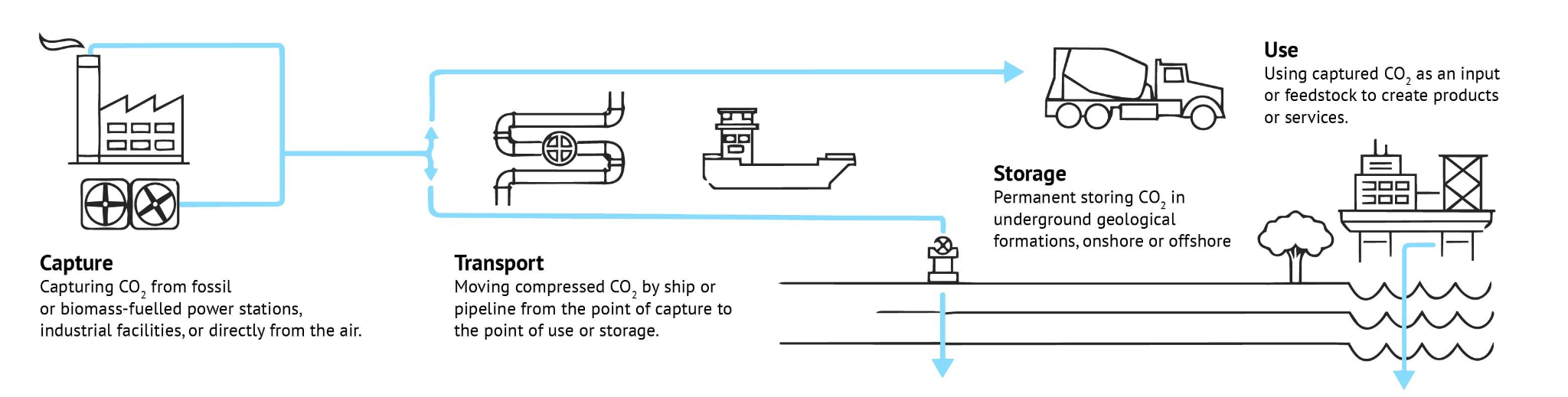
Carbon Capture and Storage (CCS) remains one of the most scrutinized technologies in industrial climate policy. While energy systems modeling frequently position CCS as a necessary tool for mitigating residual emissions from hard-to-abate manufacturing, technical complexity, infrastructure costs, and regulatory delays continue to hamper widespread implementation across the UK and Europe.
For heavy industry and waste management sectors, CCS technology offers a theoretical framework to capture carbon dioxide directly from high-emission stacks—such as energy-from-waste (EfW) facilities and primary petrochemical complexes—before injecting it into subterranean storage. However, carbon policy analysts emphasize that relying heavily on unproven CCS infrastructure introduces significant compliance risks. Capital expenditure for capture hardware remains high, and geological storage network deployment is constrained by geographic and regulatory bottlenecks. Consequently, point-of-source abatement remains substantially more cost-effective than post-emission capture.
For UK waste managers, packaging converters, and Turkish polymer reprocessors, the evolving CCS landscape directly impacts carbon accounting standards and supply chain expectations. As the UK Emissions Trading Scheme (ETS) expands to incorporate waste incineration, facility operators face growing pressure to reduce fossil carbon output. While EfW plants look to CCS to manage future carbon tax liabilities, downstream packaging converters must recognize that mechanical recycling delivers far immediate, verified carbon savings. For Turkish recyclers exporting into Europe, demonstrating real emission reductions in recycled polymer production offers a far stronger compliance profile under the EU Corporate Sustainability Due Diligence Directive and national net-zero reporting frameworks than relying on future off-site carbon capture offset mechanisms.
Practical Takeaway: Plastic converters and recyclers should focus carbon reduction strategy on operational energy efficiency, renewable power purchase agreements, and maximum post-consumer scrap utilization, rather than banking on CCS infrastructure to reduce product-level embodied carbon.