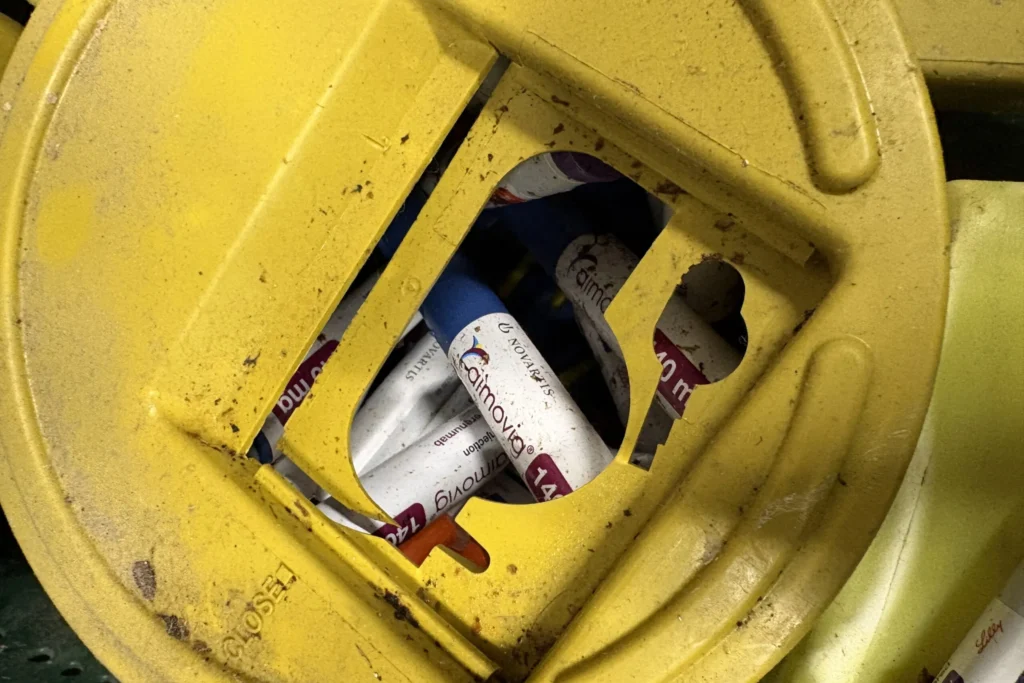
Sherbourne Recycling, a major UK waste management operator, has raised serious concerns regarding the rising frequency of weight-loss injection pens entering domestic recycling streams. The surge in popularity of injectable GLP-1 medications has led to household consumers incorrectly placing single-use auto-injector devices into kerbside commingled recycling bins, presenting significant hazards at material recovery facilities (MRFs).
The presence of medical sharps and electronic or battery-containing auto-injectors in municipal waste streams poses severe risks to facility personnel and sorting equipment. Sharps present immediate needle-stick biohazard risks for manual pickers, while embedded batteries in modern digital pens create fire hazards during mechanical shredding and ballistic separation. Furthermore, clinical waste contamination degrades the quality of recovered polymer fractions, forcing MRF operators to reject entire batches of raw packaging materials or divert contaminated streams to energy recovery.
For UK waste managers, packaging converters, and cross-border polymer recyclers, medical device contamination directly impacts operating overheads and feedstock purity. Unsorted sharps force processing facilities to implement additional safety protocols or slow down sorting lines, raising operational expenditure. For reprocessing partners receiving baled rigid plastics, medical contamination risks compromising the purity of recovered polymer streams, directly threatening regulatory compliance under UK waste handling standards and import cleanliness thresholds applied across international recycling supply chains.
Waste management firms and local authorities must strengthen targeted public awareness campaigns emphasizing correct medical waste disposal routes through pharmacy take-back schemes or dedicated clinical waste collections. Simultaneously, materials reprocessors should review incoming quality audit procedures and supplier contamination thresholds to safeguard sorting infrastructure and ensure worker safety.