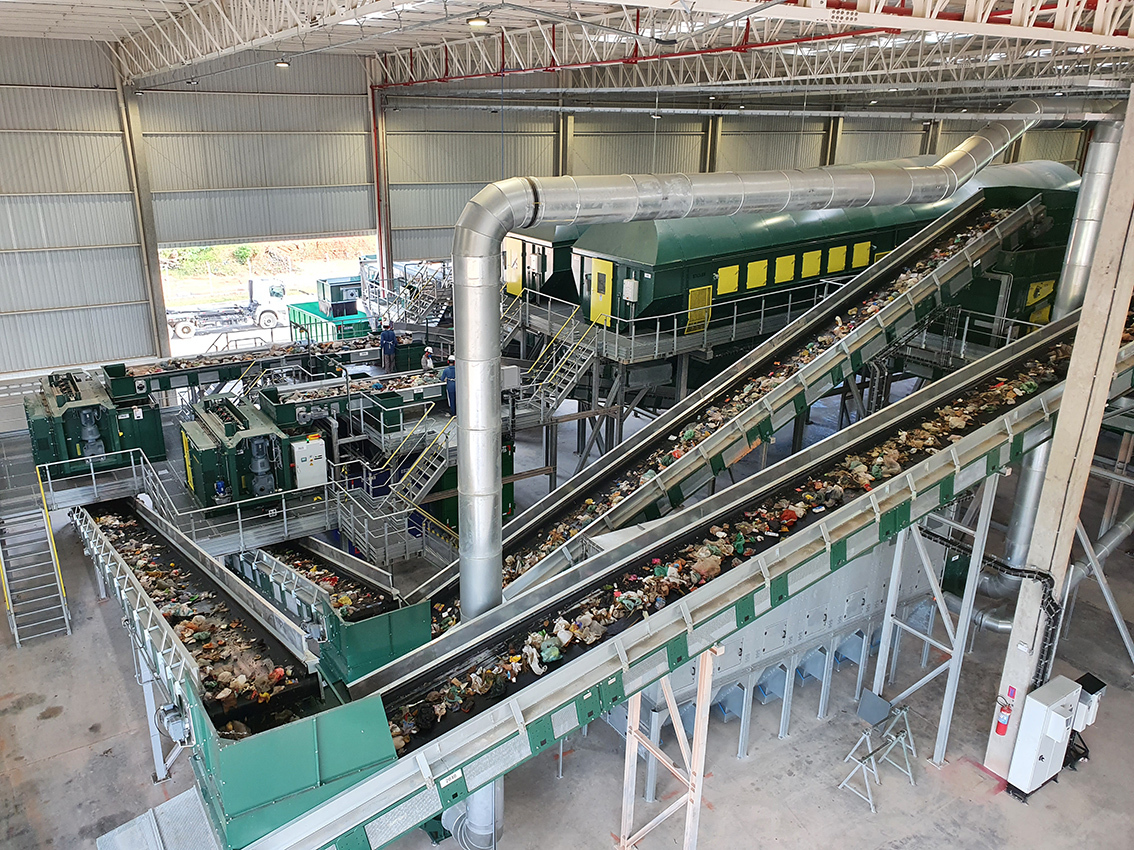
Waste sorting equipment manufacturer STADLER Group has highlighted the increasing necessity of processing residual municipal waste to meet international circular economy targets. As global municipal solid waste volumes continue to rise, the company points to mixed residual streams—traditionally sent directly to incineration or landfill—as a critical frontier for material recovery.
Extracting recyclable polymer fractions from mixed residual waste requires sophisticated mechanical sorting configurations, including advanced optical sensors, ballistic separators, and automated screening systems. As source-segregated collection rates plateau in many regions, tapping into the recyclable plastics remaining within general waste streams is becoming necessary to ensure a steady supply of feedstock for secondary reprocessors. Improving sorting precision at the front end reduces contamination, elevates downstream bale quality, and boosts recovery yields for high-demand polymers like PET, HDPE, and PP.
For UK waste management companies and Turkish plastics recyclers, this technical shift carries clear operational and regulatory implications. In the UK, rising landfill taxes and the rollout of Extended Producer Responsibility (EPR) reporting force operators to maximize material diversion from residual fractions. For Turkish recyclers importing post-consumer polymers or supplying domestic converters, securing clean, well-sorted material is crucial for maintaining throughput and complying with strict purity criteria. Implementing modern sorting processes helps operators establish auditable carbon accounting data, lower reject rates, and satisfy ESG expectations across the UK–Türkiye supply chain.
The practical takeaway for facility managers is that relying exclusively on source-separated input will likely prove insufficient to meet long-term secondary material demands. Investing in robust pre-sorting infrastructure enables facilities to extract valuable recyclables from mixed residual streams, mitigating processing costs and building resilience against volatile virgin resin markets.