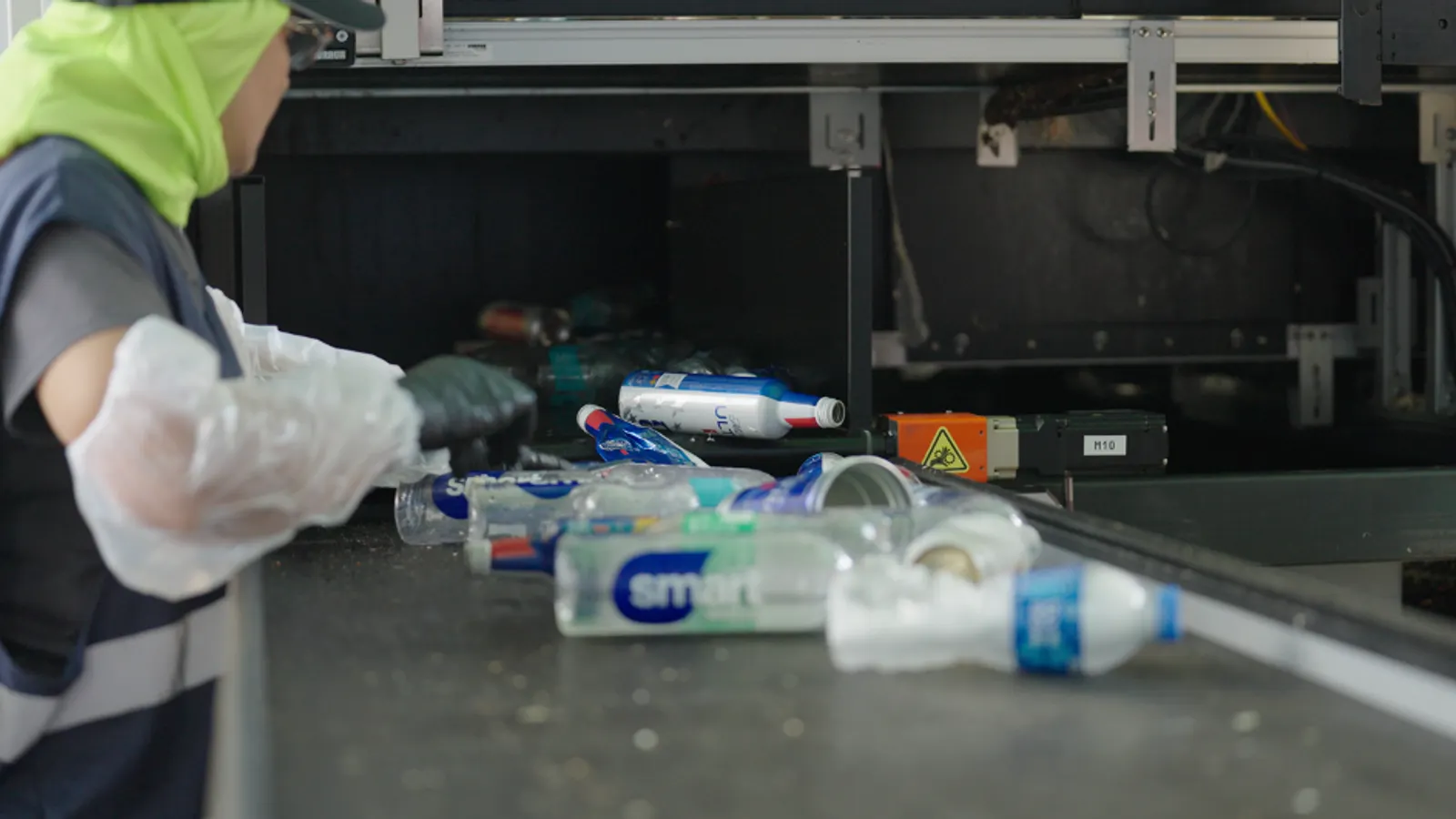
Automated waste-sorting developer rStream is expanding its artificial intelligence-driven robotic separation systems following pilot deployments at large entertainment venues, backed by federal grant funding to target transport hubs and high-footprint commercial locations.
Front-of-pipe sorting represents an evolving approach to tackling contamination at the point of consumer disposal. By deploying automated optical sensors and robotic arms directly within public waste receptacles, these systems separate high-value recyclable fractions—predominantly clear PET beverage bottles, HDPE containers, and aluminium cans—before they enter mixed waste compactors. This upstream segregation prevents food and liquid cross-contamination, which frequently degrades the quality of post-consumer plastics collected in high-traffic commercial environments.
For UK waste management firms and Turkish polymer reprocessors, the commercial viability of mechanical recycling depends heavily on input bale purity. Contaminated commercial waste streams impose heavy processing burdens on material recovery facilities (MRFs) and reprocessing plants, increasing wash-line energy consumption, wastewater treatment costs, and mechanical yield loss. Turkish recyclers purchasing imported scrap require consistently low contamination levels to ensure compliance with import inspection standards and to generate high-grade rPET suitable for food-contact packaging applications.
As extended producer responsibility (EPR) schemes and packaging taxation across the UK and Europe tighten quality thresholds, securing unadulterated post-consumer polymer streams becomes a strategic priority. Point-of-disposal robotic sorting could help commercial waste collectors capture clean commercial fractions that would otherwise be landfilled, incinerated, or downgraded to low-value mixed polymer bales.
Practical takeaway: Waste handlers and commercial facility contractors should monitor trials of on-site automated separation to assess whether upstream robotic sorting can deliver higher-margin, low-contamination polymer bales for downstream reprocessing.