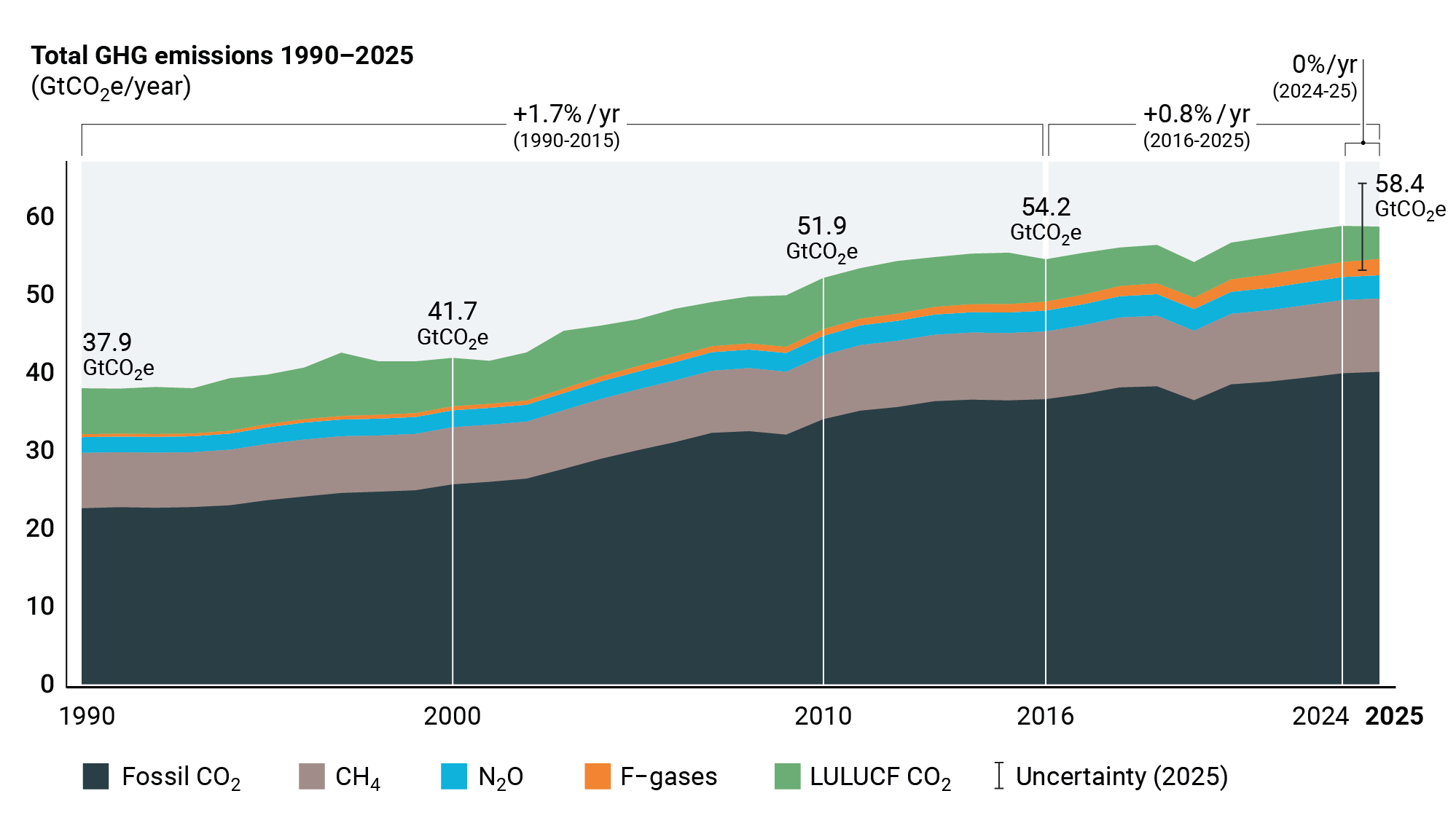
The United Nations Environment Programme (UNEP) has released its latest assessment on global emissions, concluding that breaching the 1.5°C global warming threshold is now unavoidable. Following years of delayed emissions cuts, international policy measures have failed to close the gap between current trajectories and required climate targets. The report highlights that even under optimistic scenario models, a period of temperature overshoot will occur before long-term stabilisation can be achieved.
This finding marks a structural shift in global environmental policy from gradual transition to aggressive decarbonisation measures. As international bodies acknowledge that baseline targets are being missed, regulatory pressure on manufacturing and supply chains will intensify. Governments are expected to respond by accelerating mandatory corporate carbon reporting, expanding carbon pricing mechanisms, and introducing stricter resource-efficiency demands across industrial trade borders.
For waste management operators in the UK and plastic recyclers in Türkiye, this global reality directly translates into tighter corporate compliance burdens. As policymakers seek to limit the duration of temperature overshoot, industrial sectors face aggressive scrutiny over Scope 1, 2, and 3 emissions. Turkish reprocessors exporting to Europe face heightened enforcement regarding corporate sustainability disclosures and material carbon intensity under incoming EU regulatory frameworks. Concurrently, UK packaging converters and waste collectors must prepare for evolving Extended Producer Responsibility (EPR) requirements that increasingly link carbon accounting directly to polymer traceability and recycled content claims.
A practical takeaway for recyclers and material traders is to audit and formalise their operational emissions data immediately. Standardising life-cycle assessment (LCA) methodologies and securing verifiable energy data for secondary polymer processing will rapidly shift from a commercial advantage to a baseline regulatory requirement across cross-border supply chains.