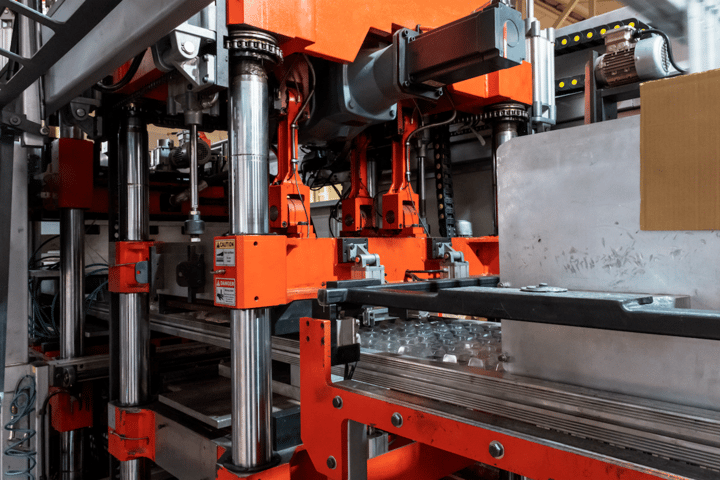
Thermoforming packaging manufacturers are increasingly turning to process automation, artificial intelligence, and aggressive lightweighting to offset escalating operational costs and satisfy stringent circular economy targets. As energy tariffs remain high and virgin polymer pricing stays volatile, converters are re-engineering rigid trays, pots, and punnets to reduce unit weight without sacrificing mechanical performance or top-load strength.
Achieving thinner wall gauges while simultaneously increasing the proportion of post-consumer recycled polymer—such as rPET and rPP—creates substantial technical challenges. Recyclate streams inherently present greater batch-to-batch variability in intrinsic viscosity and thermal behaviour than prime resins. To prevent elevated scrap rates and wall-thinning defects during high-speed production, converters are deploying machine-learning vision systems and real-time process monitoring to make immediate parameters adjustments during the heating and forming stages.
For UK packaging converters and Turkish recyclers, this shift reshapes quality requirements across the supply chain. UK converters adopting lightweight designs face diminishing tolerance for raw material inconsistency, particularly as they strive to clear the 30% recycled content threshold required by the UK Plastic Packaging Tax. Lightweight thermoforming sheet requires exceptionally clean, stable feedstock to avoid pinholes and structural failure during draw-down.
Consequently, Turkish recycling processors exporting rPET washed flake or pelletised compounds to the UK and EU must deliver higher specifications. Importers will increasingly demand tightly controlled melt flow index parameters, minimal non-melting contaminants, and reliable IV retention. Turkish suppliers capable of guaranteeing high purity through advanced optical sorting and super-cleaning technologies will secure a distinct competitive advantage.
Practical Takeaway: Converters and feedstock suppliers should establish joint protocols for IV and melt-flow stability testing. Relying solely on basic purity metrics is no longer sufficient when supplying resins destined for high-speed, lightweighted thermoforming lines.