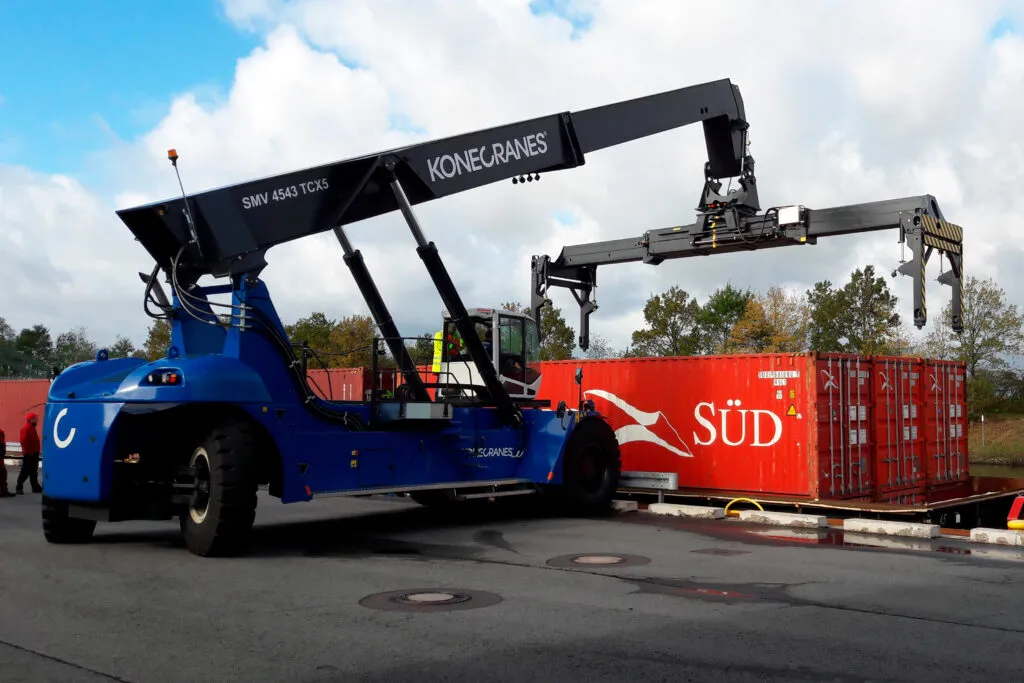
Managing river-based waste transport along the River Thames requires specialized equipment and precise schedule planning to cope with tidal ranges reaching up to seven metres in East London. Containerised barges transporting municipal and commercial materials to processing facilities must navigate tight operational windows and technical reach requirements for quay-side handling machinery.
Waterborne logistics play an increasingly vital role in urban waste strategies across major UK metropolitan areas. Shifting material transport from road to river removes heavy goods vehicles from urban networks, reducing local congestion and cutting diesel emissions. However, extreme tidal fluctuations introduce operational bottlenecks. Handling equipment must maintain safe, efficient container transfers despite substantial vertical displacement between high and low tide levels at river terminals.
For site managers and logistics planners, a key practical takeaway is the necessity of matching material-handling equipment specifications to maximum tidal variances rather than average operating heights. Integrating live hydrographic data into dispatch schedules ensures quay-side cranes and reach stackers operate within safe load limits while minimizing dwell times for river barges.
For UK waste exporters and Turkish recyclers, upstream transport efficiency directly influences the stability of secondary raw material supply chains. Bottlenecks at primary urban transfer stations can delay material consolidation, leading to missed export shipments and container imbalances at major maritime ports. Furthermore, as international buyers and Turkish processors face increasing pressure to report lower Scope 3 embedded carbon, the wider adoption of river transport within UK feeder networks helps lower the carbon baseline of exported recyclate.