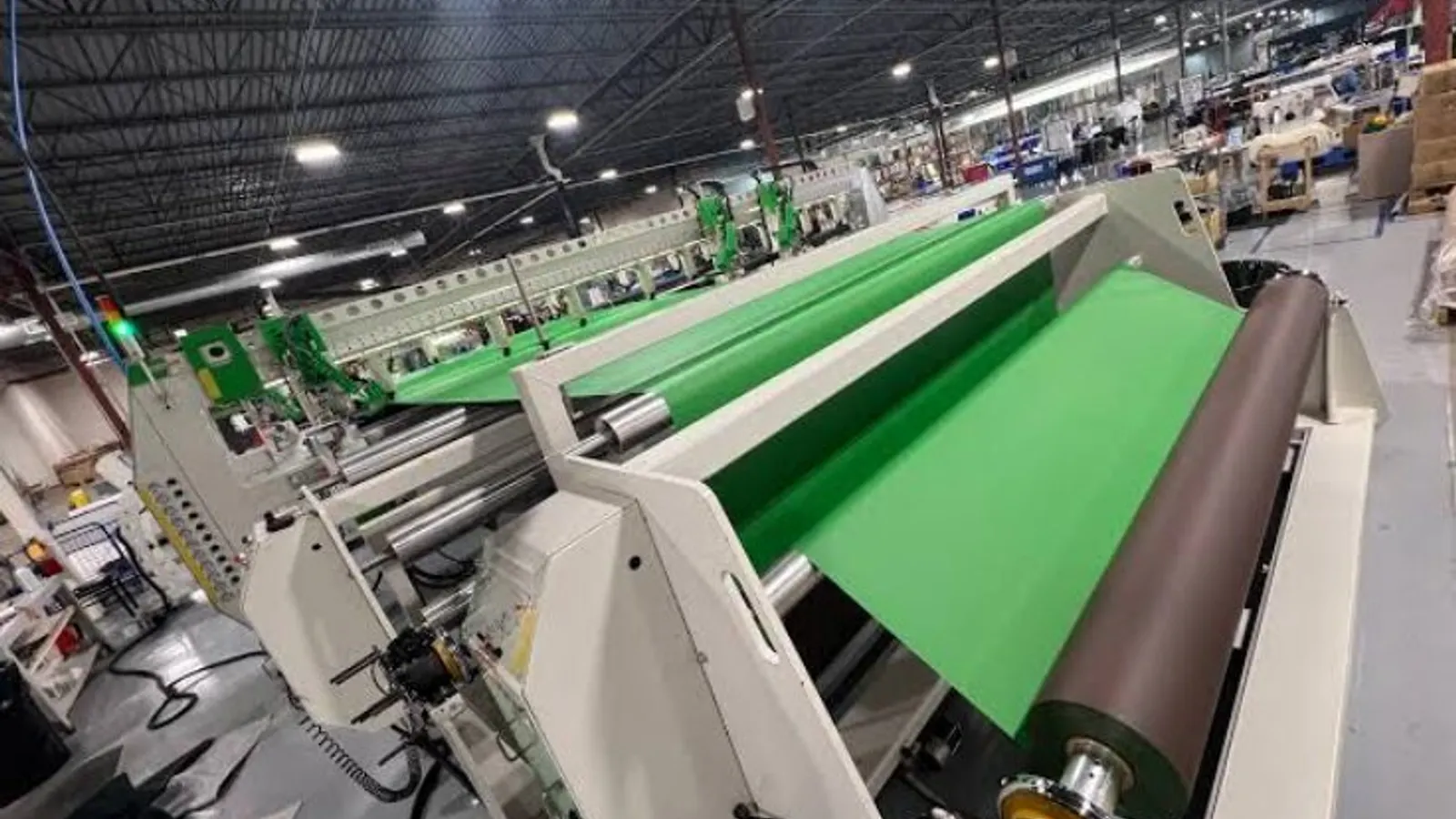
American chemical manufacturer Eastman has secured the reinstatement of a $375 million (£295 million) grant from the US Department of Energy. The federal funding, which was originally earmarked for a facility in Texas, will now be redirected toward a second molecular recycling plant at the company's primary manufacturing site in Kingsport, Tennessee. The facility will focus on depolymerising hard-to-recycle polyester wastes and PET materials.
Scaling Depolymerisation Infrastructure
The decision to shift investment to Tennessee highlights the growing reliance on established industrial sites to scale advanced recycling technologies. Depolymerisation breaks complex polyester waste down into its core monomers, yielding virgin-quality resin suitable for food-contact packaging and high-spec textile applications that standard mechanical processes cannot service.
While chemical recycling faces ongoing debate regarding energy intensity and mass-balance accounting, large-scale public subsidies demonstrate that governments view these technologies as an essential component of comprehensive circular economy strategies.
Implications for UK and Turkish Recyclers
For UK waste managers, packaging converters, and Turkish reprocessors, the development of multi-hundred-million-dollar chemical recycling assets provides an important benchmark for future market dynamics. As the UK Plastic Packaging Tax and EU mandatory recycled content targets drive up demand for high-purity rPET, global supply balances for virgin and recycled resins are becoming increasingly interconnected.
Turkish recyclers exporting to European markets must track how chemically recycled polymers compete with mechanical rPET on price, purity, and carbon emissions reporting. Furthermore, as international accounting frameworks for recycled content standardise, understanding the carbon footprint and yield profile of depolymerised resins will prove vital for compliance and corporate sustainability disclosures.
Practical Takeaway
Polymer buyers and reprocessors should treat chemical recycling as a complementary feedstock stream rather than an immediate replacement for mechanical processing. Clean, bottle-grade PET waste remains best suited to mechanical recycling due to lower energy expenditure, but tracking depolymerisation investments helps firms anticipate long-term shifts in recycled resin availability and pricing.