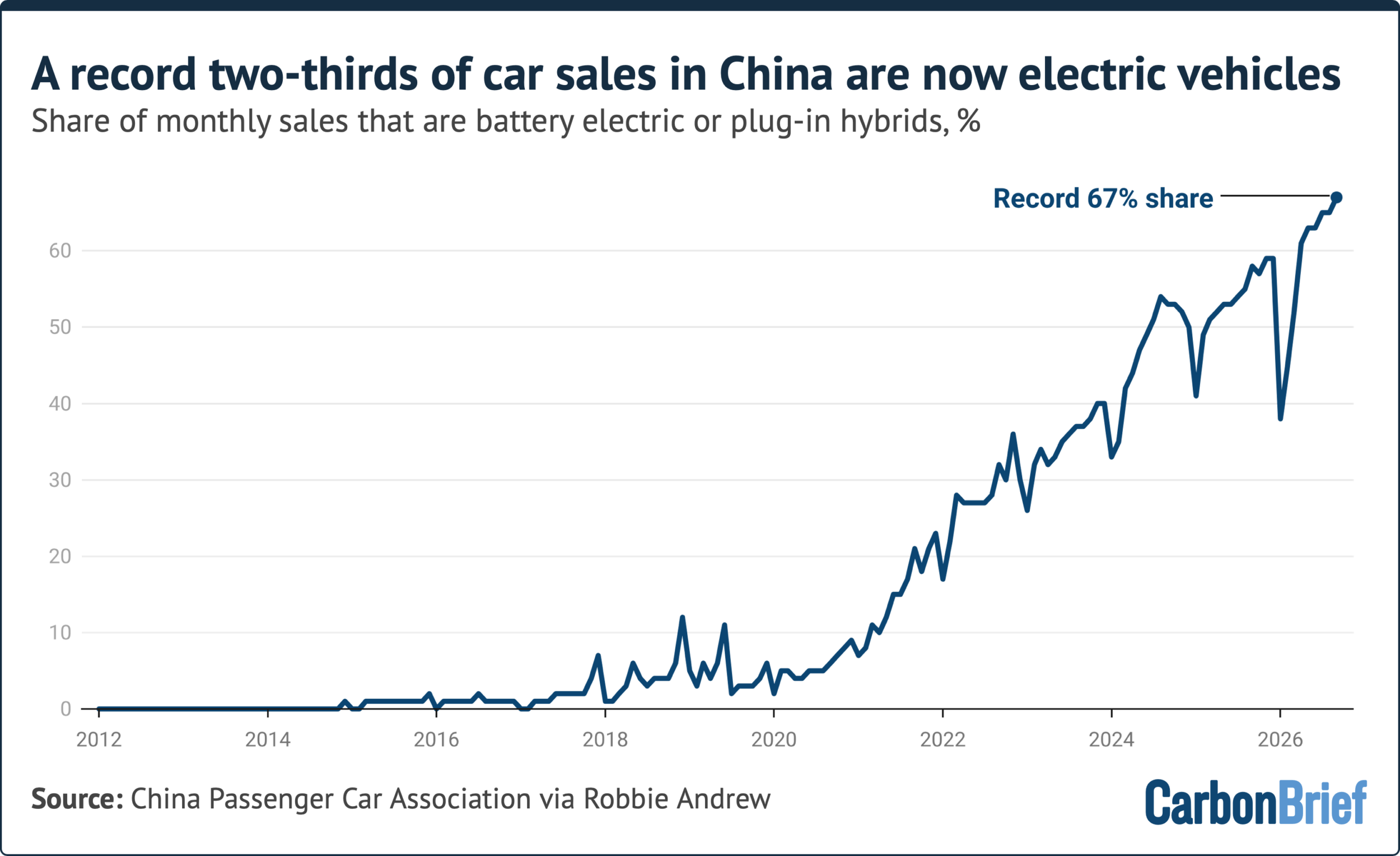
New-energy vehicles (NEVs), encompassing battery electric and plug-in hybrid models, accounted for 67% of all new passenger car sales in China during September. This milestone marks an unprecedented rate of adoption in the world's largest automotive market, signalling a rapid departure from internal combustion engines.
Why it matters
China's swift transition towards electric mobility is fundamentally altering global industrial energy demand and carbon trajectories. As the primary manufacturing hub for global transport, the scale of China's automotive transformation accelerates technology maturity and cost reductions across international supply chains.
Beyond the direct reduction in transport tailpipe emissions, this transition shifts material demand. Electric vehicles rely heavily on lightweighting strategies to extend battery range, driving increased use of technical polymers—such as modified polypropylene (PP), polyamides, and engineering plastics—for battery enclosures, structural components, and interior assemblies.
Implications for UK and Turkish recyclers
For plastics compounders, converters, and recyclers operating across the UK, Türkiye, and Europe, the global acceleration of electric mobility impacts both material streams and carbon compliance. As European and UK automotive OEMs face tightening regulations on lifecycle carbon footprints and Scope 3 emissions, demand for low-carbon, recycled technical polymers is set to rise.
Turkish polymer compounders supplying European vehicle manufacturers must increasingly benchmark their products against stringent embedded carbon metrics. Concurrently, UK waste management firms will eventually see shifts in end-of-life vehicle waste composition, requiring more sophisticated sorting and mechanical recycling capabilities for complex automotive polymer blends.
Practical takeaway
Businesses supplying or recycling automotive-grade polymers should audit their carbon accounting data and prepare for higher technical specifications, ensuring recycled compound offerings meet both performance requirements and stricter OEM decarbonisation standards.