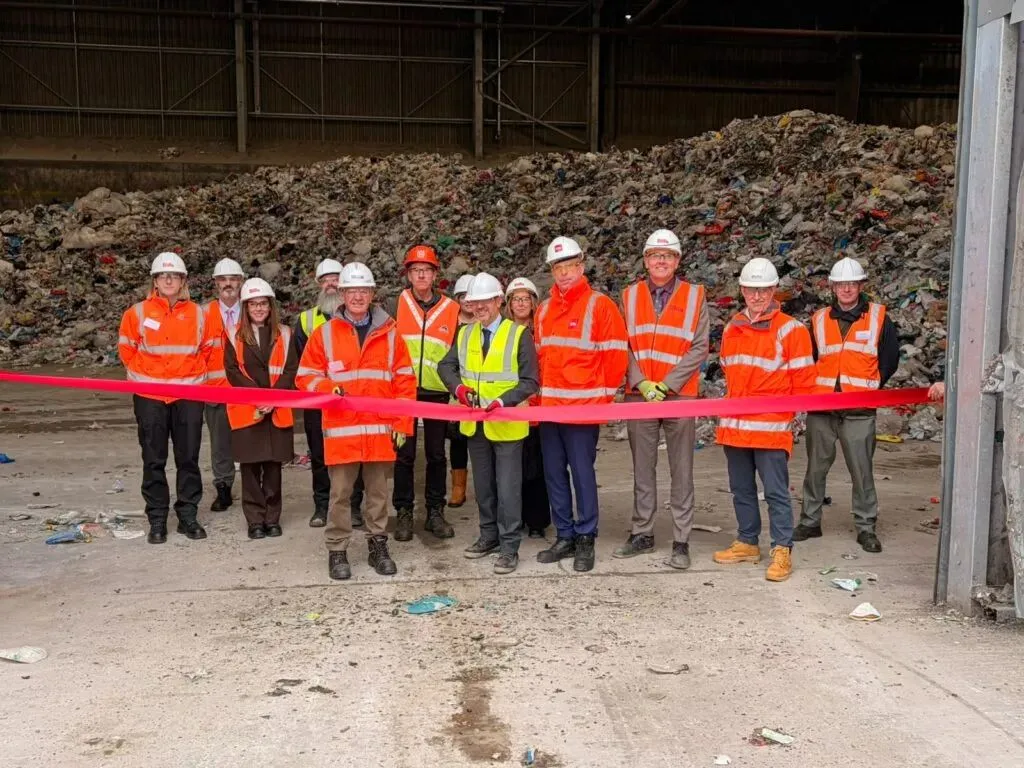
UK waste management operator Biffa has completed a multi-million-pound overhaul of one of its flagship materials recovery facilities (MRFs), leveraging financial support derived from the UK’s reform of packaging Extended Producer Responsibility (pEPR). The project represents one of the first explicit deployments of producer fees into physical waste processing infrastructure in the UK. The upgraded site incorporates advanced optical sorting and automated separation technology designed to process mixed household recyclables far more efficiently.
For several years, the UK waste sector has anticipated how pEPR scheme payments would flow through the supply chain. While initial administrative delays created uncertainty for reprocessors and local authorities, Biffa’s capital deployment signals that pEPR revenue is beginning to deliver tangible structural changes. By integrating modern automated sorting, the upgraded MRF can achieve higher purity levels for recovered polymers such as PET, HDPE, and PP. Higher domestic sorting accuracy significantly reduces contamination rates, helping material suppliers meet stringent quality benchmarks required by modern reprocessors.
For Turkish reprocessors relying on UK post-consumer scrap exports, increased investment in UK domestic sorting infrastructure presents a two-fold development. On one hand, improved optical separation at UK MRFs yields higher-grade, lower-contamination plastic bales, reducing compliance risks associated with transboundary waste movements and shipment inspections. On the other hand, expanded UK processing capacity means a greater volume of clean plastic scrap may be retained for UK domestic reprocessing, potentially tightening export volumes available to overseas reprocessors. UK waste handlers must ensure their sorting protocols align with these elevated pEPR standards, while Turkish buyers should reassess their feedstock specifications as UK material profiles evolve.
Practical takeaway: Packaging converters and waste handlers should evaluate how pEPR-funded facility upgrades will alter material supply dynamics over the next 12 to 18 months. As UK MRFs enhance optical sorting capabilities, market participants should anticipate stricter specification requirements for input waste alongside a narrowing quality gap between domestic and export-grade polymer bales.