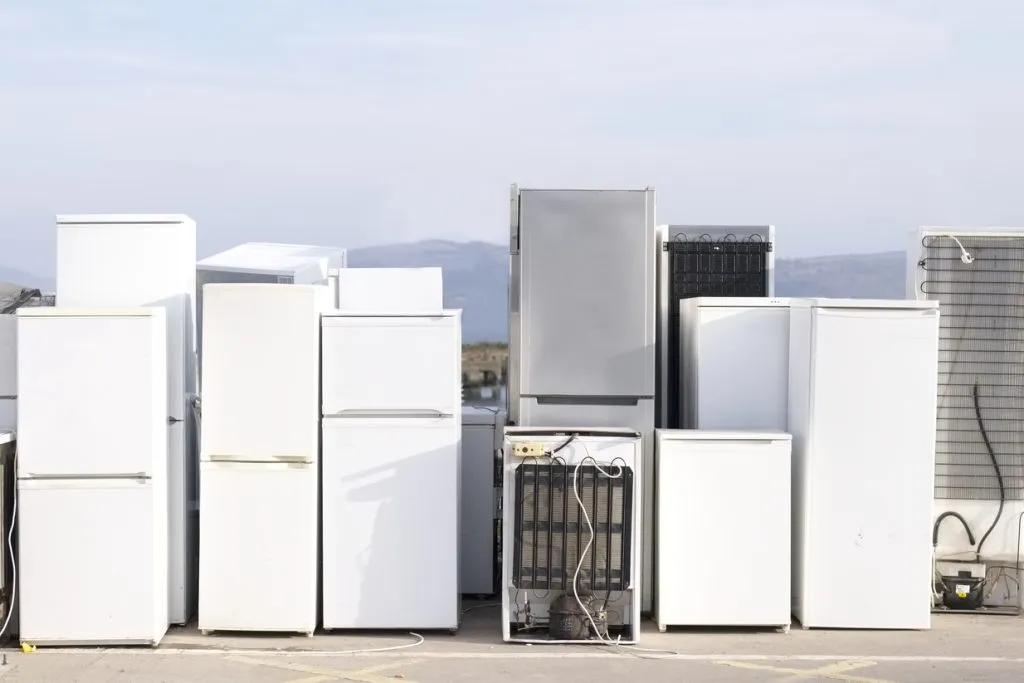
The UK’s Association of Manufacturers of Domestic Appliances (AMDEA) has warned that imposing open-ended financial charges on equipment producers will not automatically resolve the structural vulnerabilities facing the country’s fridge and cooling equipment recycling network. Responding to ongoing concerns over domestic processing capacity, the trade body argued that financial levies alone cannot build new recycling infrastructure or establish contingency frameworks to safeguard material recovery during plant outages.
Cooling appliances represent one of the most technically complex streams in municipal and commercial waste management. Beyond steel and copper, fridges yield significant volumes of rigid engineering plastics, notably high-impact polystyrene (HIPS), acrylonitrile butadiene styrene (ABS), and polypropylene (PP), alongside polyurethane insulation foam. In recent years, the UK processing sector for waste cooling equipment has faced operational bottlenecks, regulatory pressure around hazardous blowing agents, and limited regional capacity redundancy. AMDEA’s position highlights a growing friction in extended producer responsibility (EPR) design: while statutory fees compel manufacturers to cover end-of-life collection costs, financial mechanisms do not directly guarantee capital investment in specialized recycling plants.
For UK waste managers and cross-border polymer reprocessors, capacity constraints in domestic WEEE treatment present both operational challenges and supply chain risks. When UK processing infrastructure encounters bottlenecks, recovered plastic fractions experience supply disruptions and quality variability. For Turkish recyclers and reprocessors capable of compounding technical polymers like HIPS and ABS, tighter UK compliance standards and infrastructure investments could eventually yield cleaner, more standardized post-consumer regrinds. Conversely, persistent domestic treatment backlogs risk delaying the release of high-value secondary polymers into global circular supply chains.
Practical Takeaway: Waste operators and polymer off-takers handling durable plastics should closely track UK WEEE reform proposals, ensuring long-term supply contracts account for potential domestic processing disruptions. Reprocessors should maintain strict audit trails for depollution compliance to ensure secondary WEEE polymers remain fully compliant for international trade.