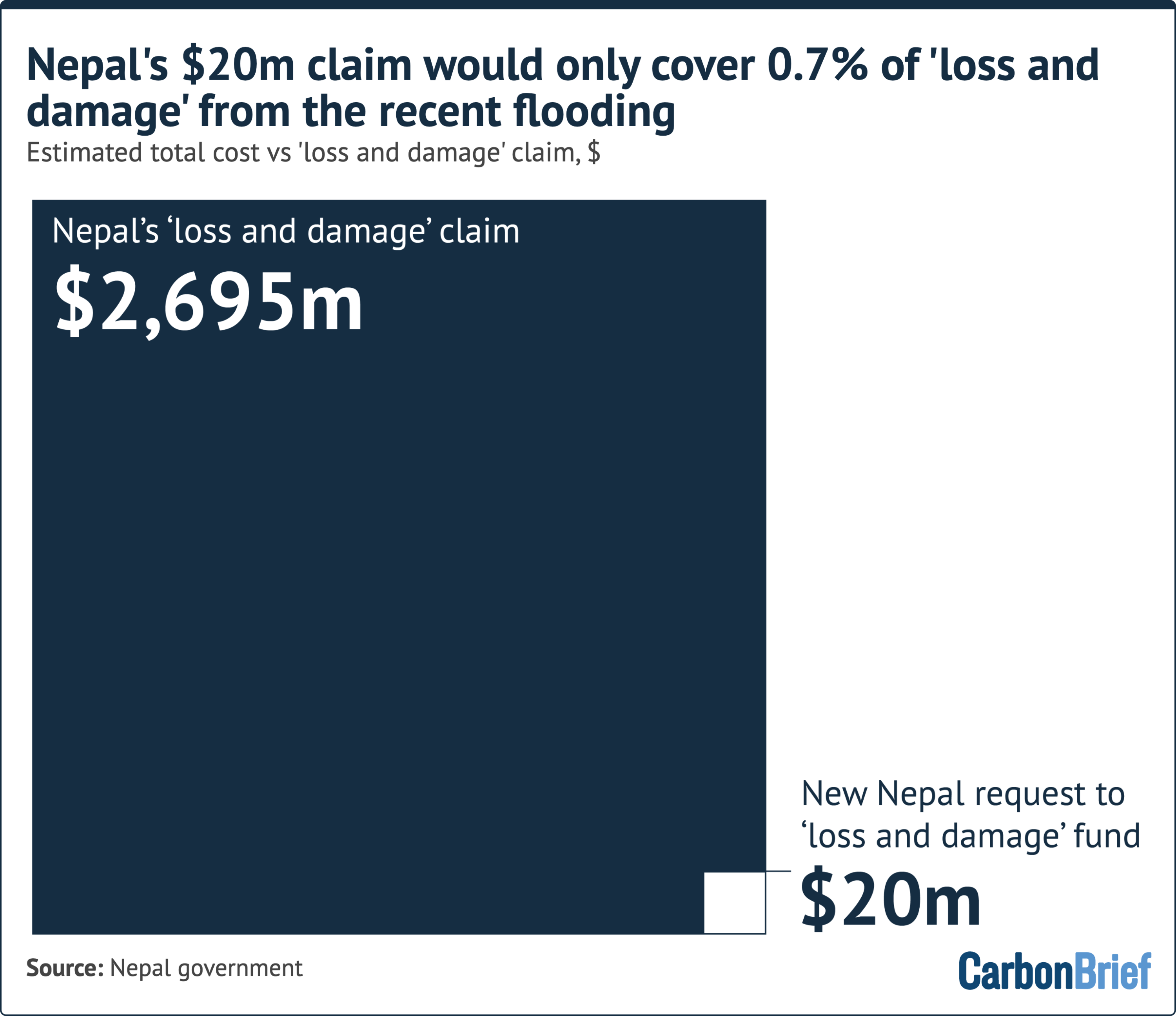
The Nepali government's recent request for $20 million (£15.8 million) from the United Nations’ Loss and Damage Fund following devastating floods has highlighted a stark reality in global climate finance. Analysis reveals that this claim covers a mere 0.7% of the estimated $3 billion in economic losses incurred during the disaster. This massive disparity underscores the severe underfunding of international climate recovery mechanisms as extreme weather events escalate.
While this funding gap represents a humanitarian and economic crisis for developing nations, it also carries broader implications for global environmental policy. As public international funds prove inadequate to cover the rising costs of climate-related damages, governments are under increasing pressure to accelerate domestic mitigation efforts. This pressure is highly likely to translate into more aggressive regulatory frameworks, higher carbon taxes, and stricter enforcement of extended producer responsibility (EPR) schemes to force private industries to fund the transition to a low-carbon economy.
For UK waste management companies and Turkish plastics recyclers, this systemic shortfall in climate finance serves as a leading indicator of future regulatory costs. To bridge the funding gap, European and UK regulators are tightening carbon accounting standards and expanding emissions trading schemes. Türkiye is similarly developing its own Emissions Trading System (ETS) to align with the EU's Carbon Border Adjustment Mechanism (CBAM). Recyclers and packaging converters must prepare for more rigorous Scope 1, 2, and 3 emissions reporting, as the financial penalties for high-carbon industrial activities are set to rise.
As a practical takeaway, operators in the UK–Türkiye recycling corridor should proactively audit their carbon intensity. Demonstrating the verified low-carbon credentials of recycled polymers over virgin alternatives will become an increasingly vital commercial asset as brands seek to shield themselves from escalating carbon liabilities.