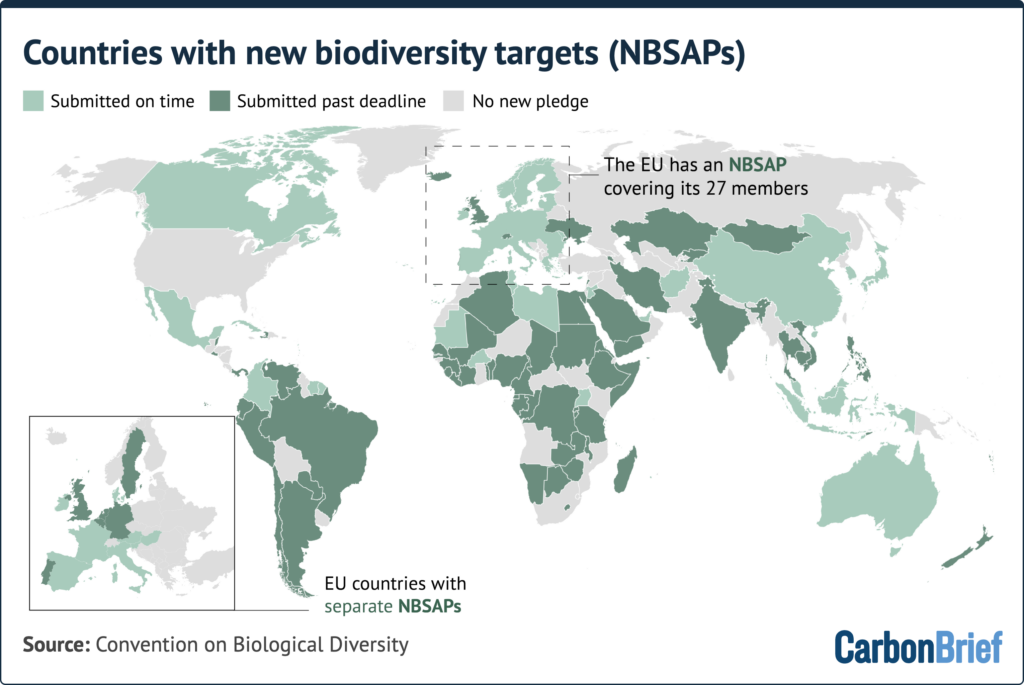
More than half of target countries have submitted updated national plans to address biodiversity decline and ecosystem degradation, fulfilling commitments made under international nature frameworks. According to tracking compiled by Carbon Brief, 58 per cent of participating governments have published formal pledges detailing how they intend to reverse habitat loss, restore degraded ecosystems, and protect natural capital over the coming decade.
The submissions mark a key step following international commitments to halt environmental destruction by 2030. While the submission rate demonstrates continued engagement with UN targets, significant implementation gaps persist, particularly regarding domestic funding mechanisms and the statutory mechanisms required to translate state-level policy into enforceable commercial regulations.
Why It Matters to Environmental Policy
National biodiversity strategies increasingly intersect with resource efficiency, waste management standards, and circular economy legislation. As governments refine their conservation commitments, domestic policy is shifting beyond traditional habitat protection toward structural requirements on industrial supply chains. This includes stricter controls over land usage, emerging natural capital reporting obligations, and heightened scrutiny of industrial waste streams that impact local marine and terrestrial environments.
Implications for UK and Turkish Recyclers
For plastics reprocessors and waste managers operating across the UK, Türkiye, and Europe, expanding nature targets reinforce the broader regulatory trend toward comprehensive corporate sustainability disclosure. Environmental regulators are progressively linking natural capital impacts with existing carbon and waste accountability frameworks.
Turkish recyclers exporting to the European Union face mounting expectations to verify that raw material procurement, site effluent controls, and operational processing adhere to stringent environmental safeguards. In the UK, waste management operators and packaging converters must navigate stricter planning conditions and local biodiversity net gain obligations when expanding physical infrastructure or redeveloping reprocessing facilities.
Practical Takeaway
Industrial reprocessors should evaluate their natural capital footprint alongside existing carbon reporting systems. Incorporating biodiversity risk assessments into standard corporate compliance procedures will help businesses adapt as supply chain transparency mandates expand across European markets.