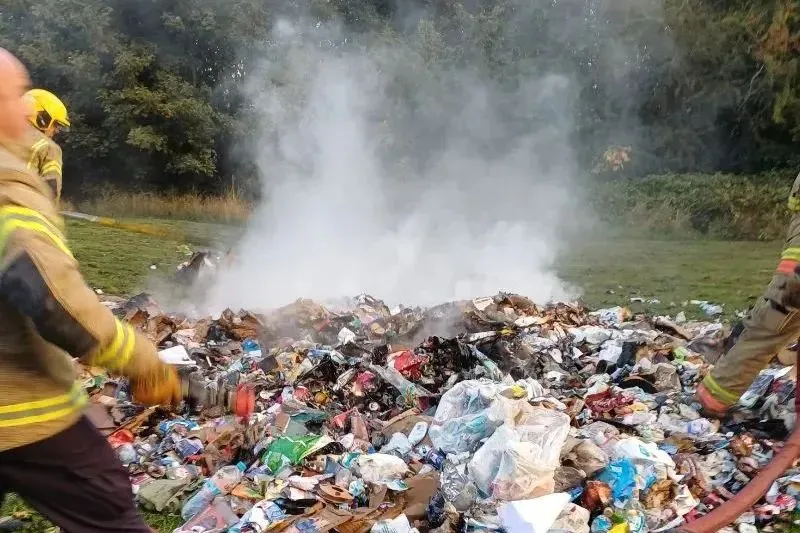
Research from campaign group Material Focus indicates that battery-ignited fires within the UK waste and recycling sector doubled over the past year, with incidents now occurring every three hours on average across the country. The organisation estimates that the overall financial burden of these blazes amounts to the equivalent of £82 per UK household annually.
The sharp increase in incidents is largely driven by loose lithium-ion batteries and unseparated waste electrical items—such as disposable vapes, personal gadgets, and power tools—entering municipal and commercial waste streams. When processed through compaction units, shredders, or balers, these batteries easily rupture, sparking fast-spreading chemical fires that threaten staff safety and destroy critical processing infrastructure.
Impact on Waste and Recycling Operations
For UK waste management firms, plastic sorting plants, and materials recovery facilities (MRFs), the practical consequences of these fires extend far beyond direct property damage. Thermal events cause severe operational downtime, disrupt material throughput, and drive industrial property insurance premiums to record highs across the sector. In some cases, facilities face insurers refusing cover altogether unless costly fire detection and suppression systems are installed.
This operational volatility directly affects the broader supply chain, including packaging converters and downstream reprocessors. Unplanned downtime at UK sorting facilities destabilises the consistent output of recovered plastic fractions, creating supply bottlenecks for clean scrap polymer bales. Furthermore, the elevated overheads associated with site insurance and emergency upgrades inevitably squeeze operating margins across the waste handling network.
Practical Takeaways
To manage this escalating risk, UK waste facilities and scrap handlers should proactively audit inbound streams and adjust operational protocols:
Upgrade detection technology: Install automated thermal imaging cameras and rapid-response suppression systems over high-risk points such as shredders and primary conveyor feeds.
Strengthen intake rules: Implement stricter contamination penalties and spot-checks on municipal and commercial bales to catch stray electronics prior to processing.
Demonstrate risk mitigation: Present detailed fire prevention and mitigation strategies during insurance renewals to help cap rising policy premiums.