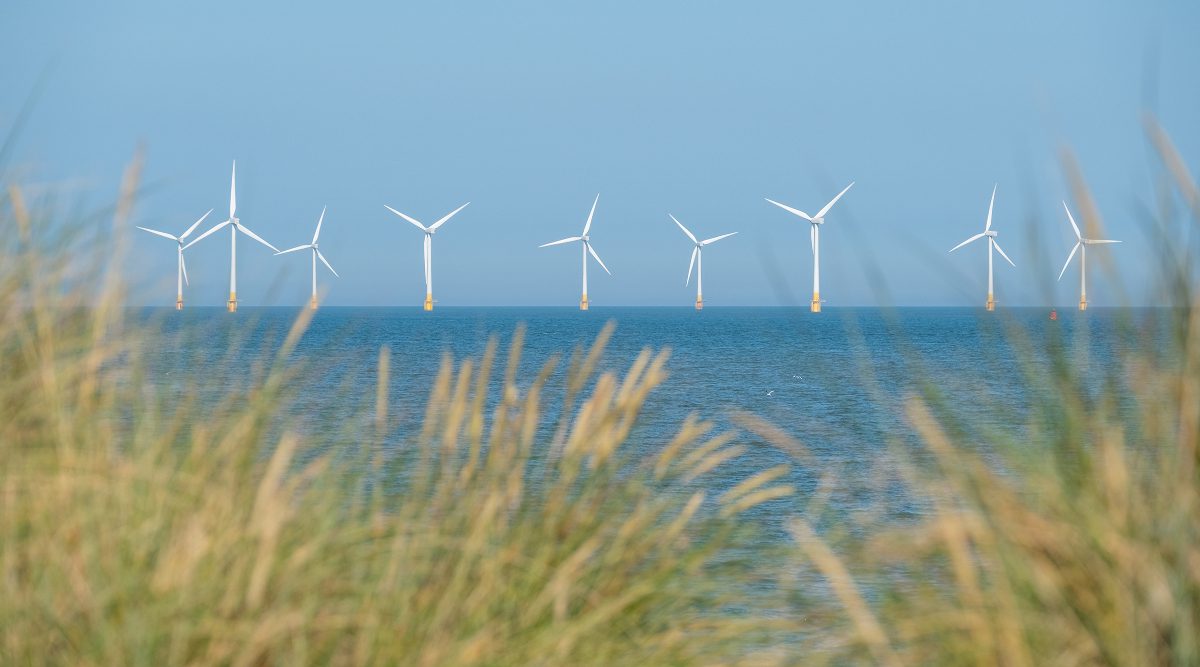
Financial arrangements for two major offshore wind farm developments off the Norfolk coast have formally closed, securing approximately £12 billion in private funding. The debt structure, managed by energy developer RWE, represents the largest non-recourse project financing agreed for UK offshore wind generation to date. The announcement coincides with official preparations for the upcoming COP31 global climate negotiations taking place in Türkiye.
The injection of capital marks a significant step in expanding the UK’s offshore renewable capacity. Once operational, the Norfolk projects will feed gigawatts of clean power into the National Grid, supporting broader national targets to decarbonise power generation by the end of the decade. Increasing the share of offshore wind reduces the grid’s reliance on natural gas, directly mitigating carbon intensity across the UK electricity network.
Relevance for recyclers and packaging converters
For industrial plastics recyclers, waste management firms, and packaging converters, electricity consumption represents one of the largest operational overheads and carbon drivers. Energy-intensive processing activities—such as mechanical shredding, washing, compounding, and extrusion—depend heavily on grid electricity.
The steady decarbonisation of the UK power grid directly impacts business sustainability performance. As renewable generation replaces fossil-fuel generation, the carbon conversion factor per kilowatt-hour of UK grid electricity drops. This enables domestic recyclers and packaging manufacturers to record lower Scope 2 greenhouse gas emissions in their annual compliance filings and carbon reporting schemes without requiring capital expenditure on site-specific generation assets.
Furthermore, as climate policy aligns cross-border expectations between the UK, the European Union, and Türkiye, verified carbon metrics are becoming essential. Turkish reprocessors exporting finished packaging products into Europe or sourcing material from the UK must maintain rigorous carbon accounting to satisfy corporate supply chain audits and emerging carbon boundary mechanisms.
Practical takeaway
Plastics reprocessors and waste companies should regularly update the carbon emission factors used in their Scope 2 accounting models to reflect ongoing UK grid decarbonisation. Operational managers should also evaluate power purchase agreements (PPAs) and green energy tariffs to ensure reported carbon metrics withstand client scrutinies and regulatory reporting obligations.