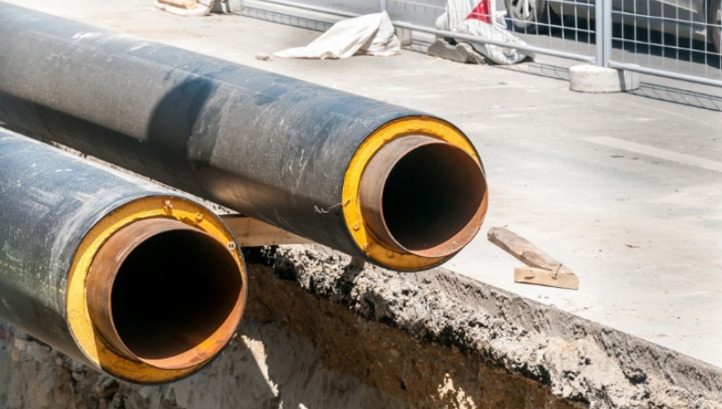
The Association for Decentralised Energy (ADE) has called on the UK government to allocate £1 billion to heat network development in its upcoming spending decisions. According to the industry body, this public funding could "unlock £4bn in wider investment" from the private sector, helping the UK meet its net-zero targets by delivering up to 20% of the nation's heating demand through low-carbon district networks.
Heat networks distribute heat from centralised sources—such as industrial processes, geothermal energy, and energy-from-waste (EfW) incinerators—directly to residential and commercial properties. The ADE argues that front-loading public investment is essential to de-risk these large-scale infrastructure projects and secure the private capital needed to scale up the market.
For UK waste management companies and packaging converters, this development carries significant operational implications. Many of the UK's district heating schemes are anchored by EfW facilities. With the UK Emissions Trading Scheme (ETS) set to expand to municipal waste incinerators by 2028, EfW operators face mounting pressure to improve their carbon efficiency. Connecting incinerators to heat networks allows them to operate as combined heat and power (CHP) plants, substantially lowering their carbon intensity per tonne of waste processed. This could help mitigate the rising costs of carbon compliance, which would otherwise be passed down the supply chain to waste producers and packaging manufacturers.
For Turkish recyclers relying on UK plastic waste exports, these domestic policy shifts are also highly relevant. As the UK tightens its carbon accounting and incentivises high-efficiency EfW systems, the domestic demand for high-calorific waste feedstocks—including non-recyclable plastics—may shift. This could influence the sorting thresholds at UK materials recovery facilities (MRFs), potentially altering the quality and volume of plastic fractions available for export to overseas recycling hubs.
Practical Takeaway: Waste sector operators should audit their regional exposure to heat network planning. Aligning waste processing contracts with localised district heating developments will become a key strategy for mitigating future UK ETS liabilities.