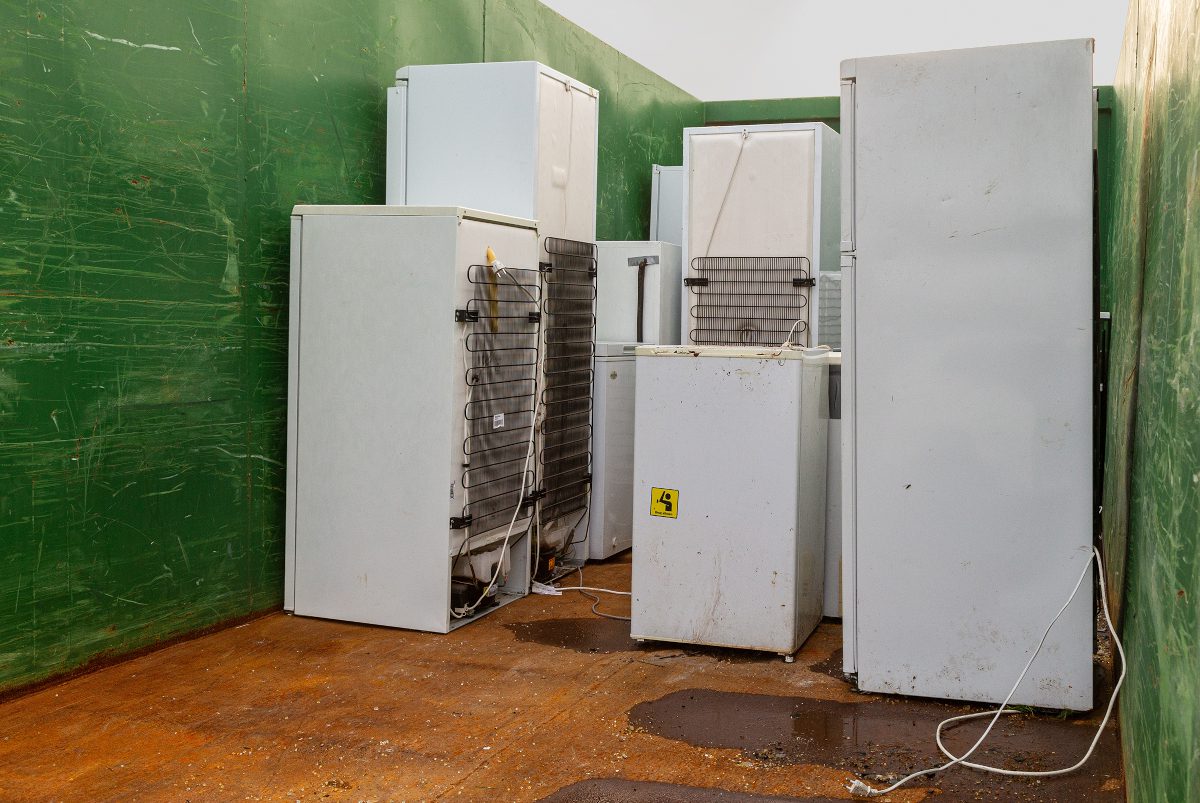
The UK's home appliance trade body, AMDEA, has urged government leaders to establish a national strategic framework to rebuild specialist fridge and freezer treatment capacity, warning that increasing compliance fees on manufacturers will not fix the underlying deficit in infrastructure.
Infrastructure Bottlenecks Under Pressure
Appliance recycling in the UK faces growing operational strains as older treatment facilities reach end-of-life or close, creating localized backlogs for complex waste electrical and electronic equipment (WEEE). Cold ambient appliances require specialized recovery lines capable of safely capturing ozone-depleting blowing agents and volatile hydrocarbons from insulation foam before shredding.
AMDEA argues that simply adjusting producer responsibility financial penalties fails to address the capital expenditure and planning hurdles required to construct modern, high-throughput reprocessing plants. Without coordinated intervention, the trade association warns that processing capacity will continue to fall short of statutory collection targets.
Impact on Waste Management and Polymer Streams
Beyond metallic scrap and blowing agent capture, cooling appliances are a primary source of post-consumer engineering plastics, notably High Impact Polystyrene (HIPS), Acrylonitrile Butadiene Styrene (ABS), and polypropylene (PP). Delays in processing infrastructure directly restrict the volume of these technical polymers entering secondary raw material supply chains.
For UK waste management companies and waste handling operators, processing bottlenecks create storage constraints and elevate compliance risks under strict environmental permitting rules. For Turkish recyclers and international polymer traders importing recovered WEEE scrap, capacity shortfalls in the UK alter export volumes and can reduce the consistency of sorted plastic fractions entering the global market.
Practical Takeaway
Recyclers and waste operators should track ongoing UK policy developments surrounding WEEE regulation reform. Companies handling WEEE plastics should review their downstream sorting protocols to ensure high-purity recovery of HIPS and ABS fractions, maximizing material value despite broader infrastructure challenges.