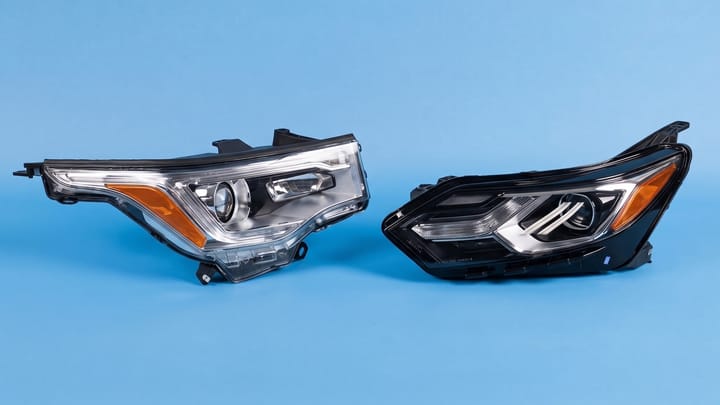
The Society of Plastics Engineers (SPE) has announced three finalists in the sustainability category for its annual Automotive Innovation Awards. The shortlisted solutions comprise a commercial remanufacturing process for automotive lamps, a bio-circular flexible foam developed for vehicle seating, and a polyacetal (POM) resin manufactured using carbon-capture technology for original equipment manufacturer (OEM) applications.
Industrial context and significance
Automotive manufacturers across Europe are facing increased scrutiny over embodied carbon and material circularity. While post-consumer mechanical recycling remains standard for commodity packaging polymers, high-performance automotive components require strict mechanical, thermal, and cosmetic performance. The selection of these three finalists demonstrates that technical engineering resins are increasingly integrating non-fossil feedstocks—such as bio-based waste streams and captured industrial emissions—without compromising material specifications.
This shift reflects broader structural changes in technical polymer supply chains. Automakers are seeking to lower Scope 3 emissions ahead of anticipated revisions to European end-of-life vehicle directives and tightening corporate sustainability reporting mandates.
What this means for UK and Turkish recyclers
For Turkish compounders and recyclers supplying the European automotive export sector, the commercialisation of carbon-captured and bio-circular resins signals a shifting baseline for supply chain compliance. Turkish processors serving automotive OEMs will increasingly be expected to verify carbon reduction metrics and maintain chain-of-custody certifications, such as ISCC PLUS, to audit mass-balance allocations.
For UK waste management firms and reprocessors, the trend highlights a growing requirement to separate complex engineering waste streams from standard municipal outputs. As chemical recycling and remanufacturing processes gain traction alongside traditional mechanical routes, high-purity industrial polymer fractions will command higher value. Establishing clean separation processes for technical plastics will be essential as carbon accounting frameworks align across the UK, EU, and Turkish markets.
Practical takeaway
Plastics reprocessors and technical compounders should evaluate their readiness for mass-balance traceability and life-cycle assessment (LCA) reporting. As automotive OEMs validate alternative carbon feedstocks, similar low-carbon material demands will rapidly filter into industrial and commercial packaging sectors.