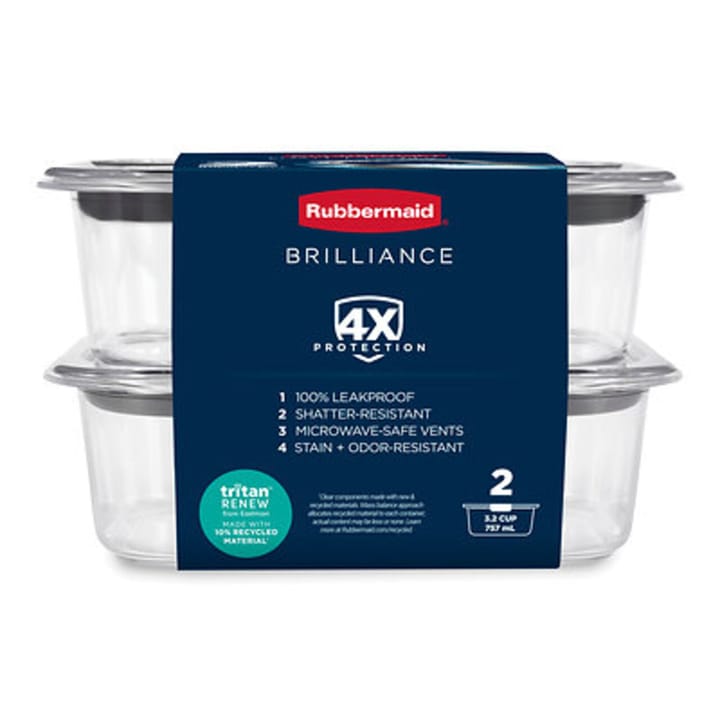
Newell Brands has updated its Rubbermaid Brilliance food storage container line to incorporate Eastman’s Tritan Renew copolyester. This material transition introduces 50% certified recycled content into the premium storage range, utilising molecular recycling technologies to process waste plastics that are typically difficult to recycle mechanically.
This development highlights the accelerating commercialisation of chemical recycling for high-performance, food-contact applications. While mechanical recycling remains the standard for polyethylene terephthalate (PET) beverage bottles, it often struggles to meet the stringent safety and aesthetic requirements for durable, transparent food containers. Molecular recycling breaks down waste polymers into their basic monomer building blocks, allowing the synthesis of virgin-quality resins that carry mass-balance certification.
For UK packaging converters and Turkish recyclers, this transition underscores a significant shift in how food-contact compliance is achieved. As the UK Plastic Packaging Tax and evolving EU packaging regulations demand higher recycled content, converters must look beyond traditional mechanical recycling. Turkish exporters supplying the UK and European consumer goods markets will increasingly need to familiarise themselves with mass-balance accounting and ISCC PLUS certification schemes to validate the recycled credentials of their products.
Furthermore, this shift influences feedstock dynamics. UK waste management companies should note that chemical recyclers are actively seeking feedstocks that fall outside the traditional mechanical recycling stream, including coloured or mixed polyester waste.
The practical takeaway for the sector is clear: as brand owners face mounting regulatory pressure to incorporate recycled content into sensitive applications, the market is splitting into a dual-track system. High-purity mono-materials will continue to feed mechanical recycling loops, while complex or durable rigid plastics will increasingly rely on chemical recycling partnerships to satisfy food-grade demands.