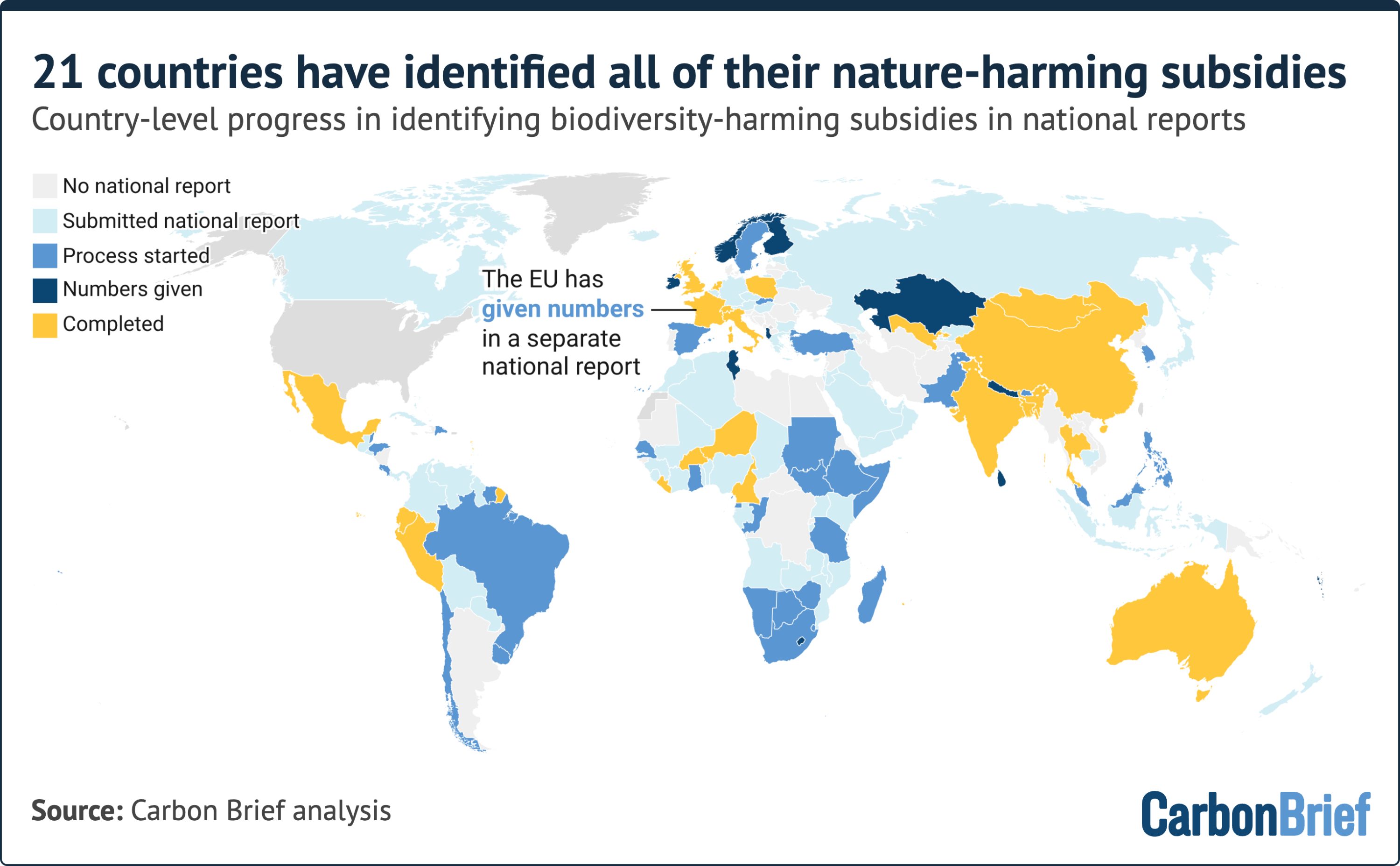
An analysis by Carbon Brief reveals that 84% of signatory nations have missed a key 2025 deadline established under the Kunming-Montreal Global Biodiversity Framework. The mandate required governments to identify and map all domestic subsidies and financial incentives that cause harm to biodiversity, as part of a broader commitment to phase out or reform at least $500 billion per year of detrimental support by 2030.
The deadline was intended to serve as a baseline assessment to allow structural reform of public finance across agriculture, forestry, resource extraction, and energy. However, only a small fraction of countries submitted detailed reviews, highlighting widespread implementation lags in national environmental policy frameworks.
Why It Matters
Government subsidies directly influence the relative pricing between virgin materials and recycled substitutes. In many industrial sectors, fossil fuel and petrochemical feedstocks benefit from indirect financial support, infrastructure subsidies, or tax breaks. This artificially lowers the cost of virgin polymer production compared to secondary raw materials.
Failure to systematically identify and redirect these nature-harming subsidies delays the financial rebalancing necessary to make circular economic models competitive. Without targeted fiscal reform, recycled polymers will continue to face uneven market conditions against virgin resins supported by historical state incentives.
Impact on UK and Turkish Recyclers
For waste management firms in the UK and plastics recyclers in Türkiye, the delayed phase-out of harmful subsidies prolongs market distortion between virgin and recycled polymers. While corporate reporting standards—such as the EU Corporate Sustainability Reporting Directive (CSRD) and the Taskforce on Nature-related Financial Disclosures (TNFD)—increasingly require businesses to account for biodiversity impacts along supply chains, state policy continues to lag behind commercial disclosure requirements.
Turkish reprocessors exporting recycled plastic flake and granules to European markets need to track these policy trajectories closely. If governments eventually redirect harmful subsidies into green industrial funds or tax incentives for circular manufacturing, secondary material processors could see enhanced capital support and regulatory tailwinds.
Practical Takeaway
Recyclers and packaging converters should prepare for tightening corporate biodiversity disclosure standards while maintaining realistic expectations regarding rapid policy-driven price adjustments for virgin resins. Compliance teams ought to integrate biodiversity metrics into ESG reporting ahead of anticipated national legislative shifts later this decade.