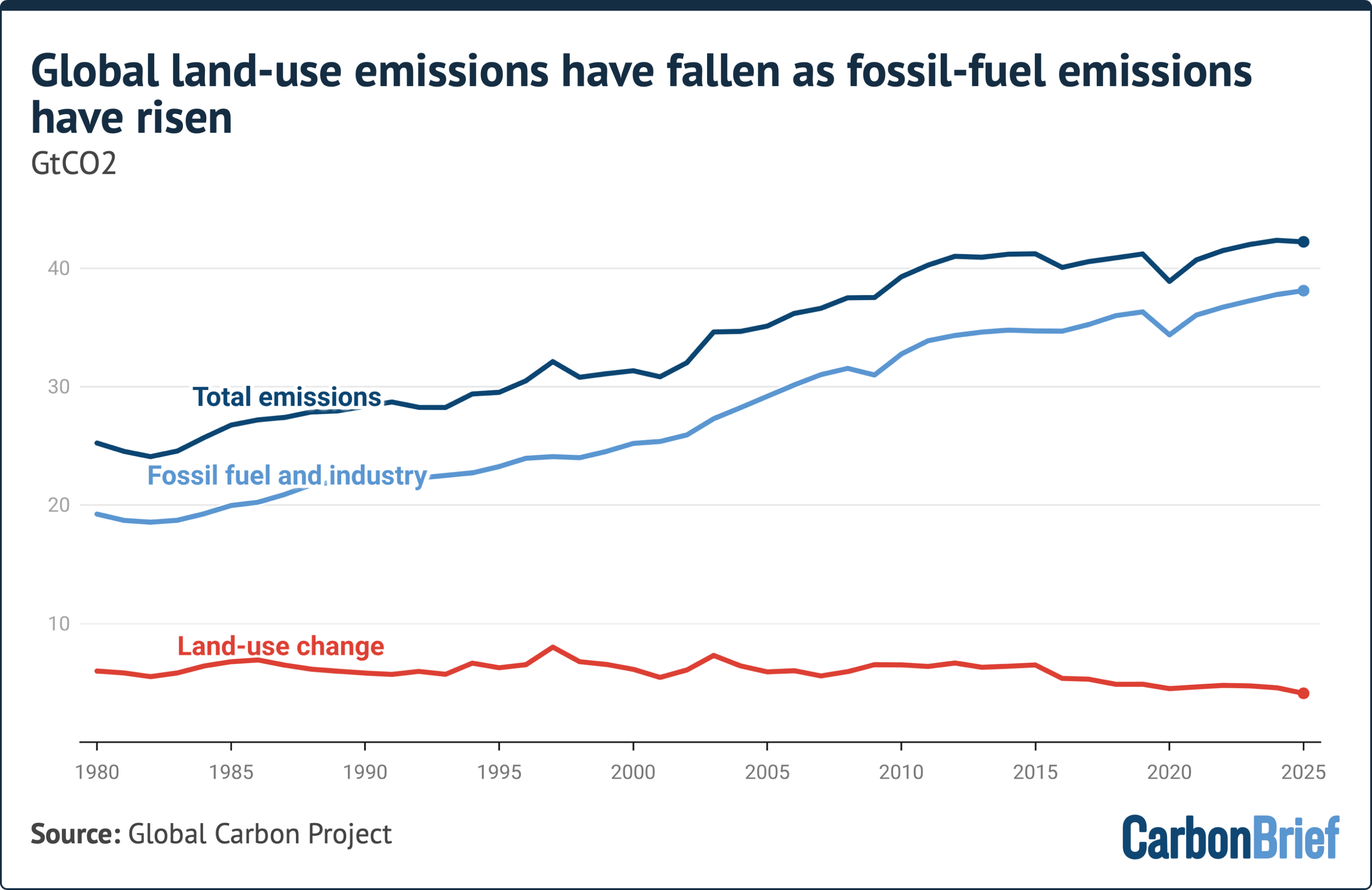
Global emissions from land-use change, including deforestation and peatland degradation, have decreased by approximately one-third since the turn of the century, according to a comprehensive analysis by Carbon Brief. While fossil fuel emissions continue to rise, the decline in land-use emissions reflects slower rates of tropical deforestation and increased reforestation efforts in temperate regions.
This shift is highly significant for the broader decarbonisation agenda. Land-use change has historically been a major contributor to global greenhouse gas inventories. The downward trend suggests that international conservation policies and changing agricultural practices are beginning to take effect, though scientists warn that preserving existing carbon sinks remains critical to meeting net-zero targets.
For UK packaging converters and Turkish recyclers, this macro-environmental trend has direct implications for carbon accounting and material selection. As brands face mounting pressure to reduce Scope 3 emissions, they must evaluate the lifecycle emissions of their packaging materials. Bio-based plastics are often marketed as green alternatives, but their production can drive indirect land-use change, which negatively impacts their overall carbon balance.
In contrast, recycled polymers—such as rPET, HDPE, and PP—do not require agricultural land, meaning they carry zero land-use change emissions. As global carbon accounting methodologies become more sophisticated and regulated under EU and UK frameworks, the land-use benefits of recycled plastics over bio-based alternatives will become a key selling point. Turkish recyclers exporting to the UK and EU can leverage this data to demonstrate the superior environmental profile of mechanical recycling.
The practical takeaway for the sector is to integrate comprehensive lifecycle assessment (LCA) data into product marketing. Recyclers and converters should actively highlight the land-preservation benefits of recycled resins compared to virgin bio-polymers, ensuring compliance with tightening green claims regulations.