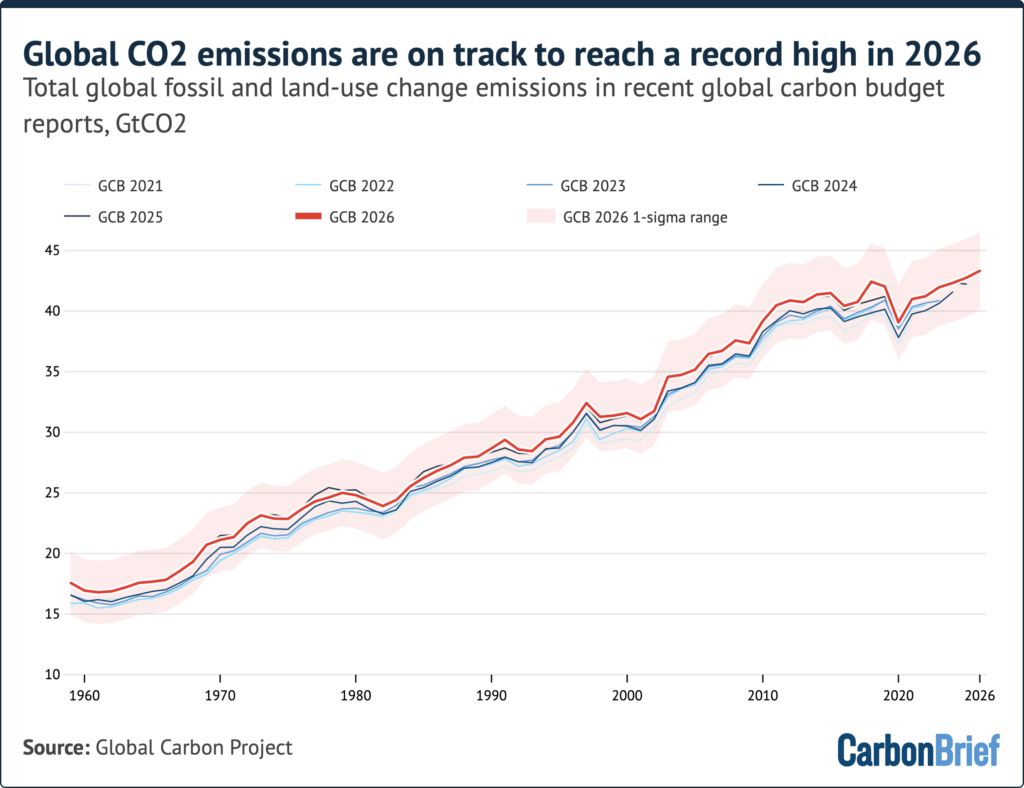
Global fossil-fuel carbon dioxide emissions are projected to decrease by approximately 0.4% in 2026, reaching 38.2 billion tonnes, according to a recent analysis by Carbon Brief. The anticipated contraction is primarily attributed to disruptions in global oil supply and shifting consumption patterns triggered by geopolitical conflict involving Iran, alongside the ongoing expansion of clean energy capacity.
While a reduction in carbon output aligns with international climate objectives, the underlying drivers highlight deep volatility in global energy markets. Fluctuations in petroleum availability directly affect the cost of naphtha and fossil-derived feedstocks, creating broader pricing instability across virgin resin markets. Concurrently, shifting industrial energy costs influence processing economics for manufacturing hubs in Europe and Türkiye.
What this means for UK–Türkiye recyclers
For UK waste management operators, packaging converters, and Turkish reprocessors, macro emissions trends and fossil fuel volatility directly affect operational costs and Scope 3 compliance. Turkish reprocessors operating energy-intensive washing, shredding, and extrusion lines remain vulnerable to broader energy price spikes resulting from oil market unrest.
At the same time, volatile virgin polymer prices—caused by oil market shocks—directly impact the price spread between virgin and recycled resins such as rPET, rHDPE, and rPP. Furthermore, as mandatory sustainability disclosures tighten under UK and EU frameworks, recyclers and converters must demonstrate continuous carbon reductions. Tracking embedded emissions across cross-border UK–Türkiye supply chains will be critical as regulatory pressure increases and carbon accounting becomes integrated into purchasing decisions.
Practical takeaway
UK packaging buyers and Turkish recyclers should audit their carbon accounting frameworks for Scope 1, 2, and 3 emissions to meet evolving UK and EU regulatory requirements. Investing in energy-efficient recycling machinery and securing long-term contracts for recycled feedstocks will help shield operations from virgin polymer price swings driven by fossil fuel market volatility.