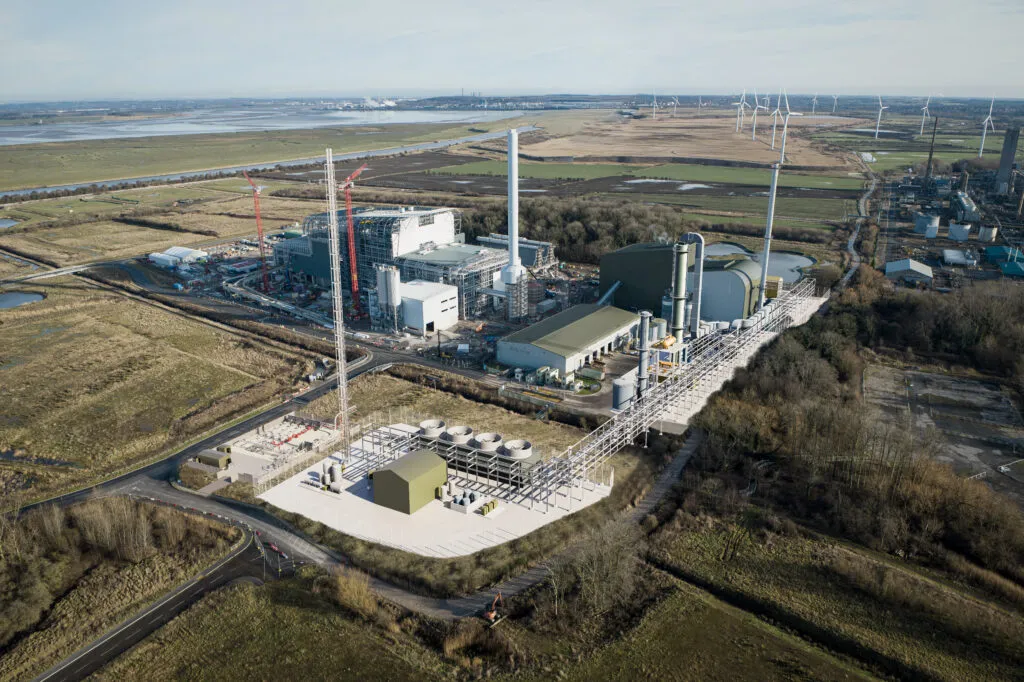
UK energy infrastructure business Evero has submitted planning applications to local authorities to install carbon capture technology at its Ince Bio Power facility in Cheshire. The proposal aims to link the biomass-powered plant directly into the regional HyNet North West carbon capture, utilisation, and storage (CCUS) infrastructure pipeline.
If approved, the project will capture biogenic carbon dioxide emissions generated during biomass combustion, transporting the gas via pipeline for secure underground storage in depleted off-shore gas fields beneath the Irish Sea. The initiative forms part of Evero's wider strategy to deploy bioenergy with carbon capture and storage (BECCS) across its portfolio of waste and biomass assets in the United Kingdom.
Why it matters
The expansion of industrial decarbonisation hubs like HyNet North West reflects a structural shift in UK waste management and energy generation. The UK government is relying heavily on bioenergy with carbon capture to generate net-negative carbon removals, particularly in concentrated industrial regions.
Integrating carbon capture into biomass and waste processing facilities establishes a template for reducing the net carbon intensity of energy supplied to domestic manufacturing. For regional infrastructure, joining transport and storage networks provides a commercial pathway for facilities to future-proof operations against tightening carbon policy and rising compliance burdens.
Impact on recyclers and supply chain reporting
For plastics recyclers, packaging converters, and waste management operators, this project highlights the evolving landscape of Scope 2 emissions and carbon accounting. As regional energy providers decarbonise process energy through CCUS technology, the electricity and heat supplied to nearby reprocessing plants will carry lower embodied carbon.
Furthermore, with regulatory mechanisms such as corporate sustainability reporting directives and the upcoming UK Carbon Border Adjustment Mechanism (CBAM) placing scrutiny on supply chain carbon, recyclers need to track operational carbon profiles. Infrastructure projects that reduce the carbon baseline of industrial hubs will help compliant reprocessors demonstrate lower lifecycle emissions to brand owners and export markets.
Practical takeaway
Waste management firms and polymer converters should audit their energy supply agreements and baseline emissions data, ensuring they are prepared for stricter carbon accounting and verification requirements across international supply chains.