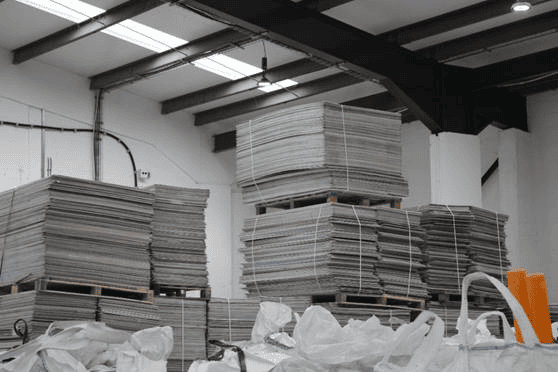
Plastics manufacturer Corplex has developed a recycling methodology incorporating deinking technology designed specifically for printed plastic advertising boards used on public transport. Traditionally, printed polypropylene graphics boards have faced restricted end-of-life options, frequently limited to two or three uses before being downcycled into lower-grade applications or sent for energy recovery. The newly introduced closed-loop system removes surface inks, allowing the recovered polymer to be reprocessed directly into new graphic display boards.
Ink contamination remains a primary technical barrier in the mechanical recycling of printed polyolefins. Standard recycling processes often melt printed substrates with the ink intact, resulting in dark, discoloured regrind with compromised aesthetic and physical properties. By systematically stripping ink pigments prior to re-granulation, the process preserves the intrinsic quality of the base resin. According to lifecycle evaluations, recovering and re-integrating this material back into equivalent products generates a carbon footprint reduction of up to 80% compared with prime virgin polymer production.
For UK waste collectors, packaging converters, and Turkish recycling operators, the advancement of viable deinking solutions marks a significant shift in post-industrial and post-consumer scrap management. As carbon accounting standards become more stringent across the UK and the EU, demonstrating verifiable carbon reductions through closed-loop mechanical recycling offers a clear commercial advantage. Turkish recyclers seeking to export high-quality recycled polyolefins into European markets face increasing demands regarding purity and colour consistency. Adopting or collaborating with deinking infrastructure allows reprocessors to upgrade contaminated scrap streams into premium-grade flakes and pellets, directly assisting converters in fulfilling recycled content obligations without sacrificing material performance.
Converters and reprocessors should audit their printed polyolefin scrap streams to assess whether residual inks are depressing material values. Engaging with technology vendors that offer specialised washing and deinking treatments can unlock higher-tier recycling pathways, helping operators lower Scope 3 emissions while preserving feedstock quality.