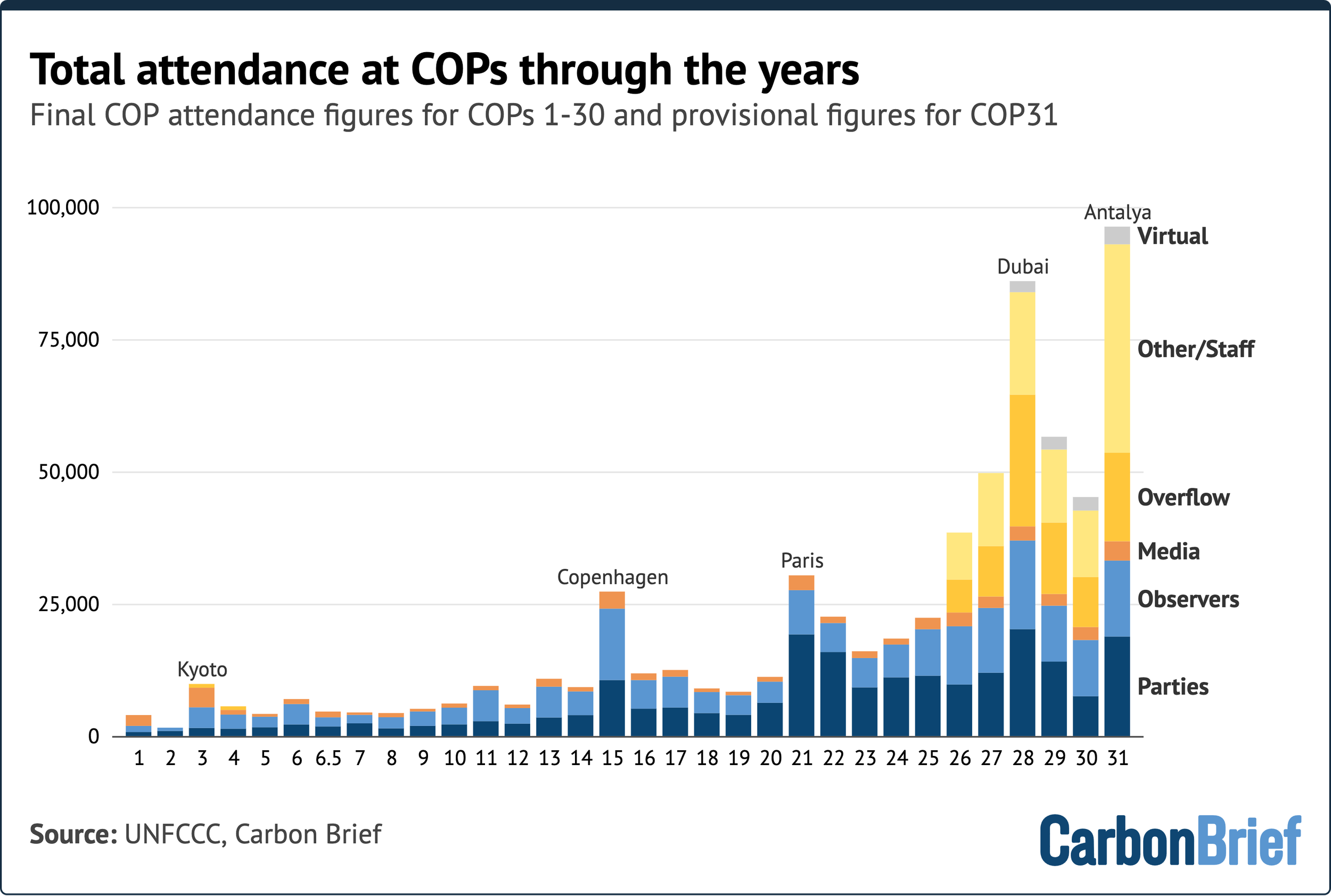
According to an analysis by Carbon Brief, the COP31 climate summit in Antalya, Türkiye, is set to become one of the largest UN climate gatherings on record, with over 92,000 registered participants.
Hosting a conference of this magnitude places Türkiye squarely at the centre of international climate negotiations and environmental scrutiny. Host nations typically experience heightened domestic political momentum toward accelerating green transition policies, aligning local industrial strategies with global net-zero trajectories, and updating national decarbonisation targets. As a crucial manufacturing and recycling hub servicing European and British supply chains, Türkiye's central role at COP31 signals a broader shift toward stricter domestic environmental oversight and accelerated climate policy adoption.
For UK waste exporters, packaging converters, and Turkish reprocessors, the elevated focus on Türkiye's sustainability framework carries direct operational implications. International climate summits increasingly influence national trade policies, including corporate carbon reporting requirements and circular economy mandates. As Türkiye works to align its industrial sector with international standards—particularly in light of upcoming carbon border adjustment mechanisms—recyclers operating in the country will face growing pressure to audit and declare their operational carbon footprints.
UK packaging converters sourcing recycled polymers from Turkish processors will increasingly demand verified Scope 1, 2, and 3 emissions data to satisfy their own domestic compliance requirements, such as Extended Producer Responsibility (EPR) obligations and ESG reporting. Furthermore, Turkish recyclers that can demonstrate low-carbon processing methods alongside recycled content verification will gain a competitive advantage in the UK market.
Practical Takeaway: Businesses trading polymers between the UK and Türkiye should audit their supply chain emissions reporting systems now. Expect host-nation climate commitments to translate into stricter local reporting mandates and emissions tracking requirements across Turkish manufacturing and processing facilities.