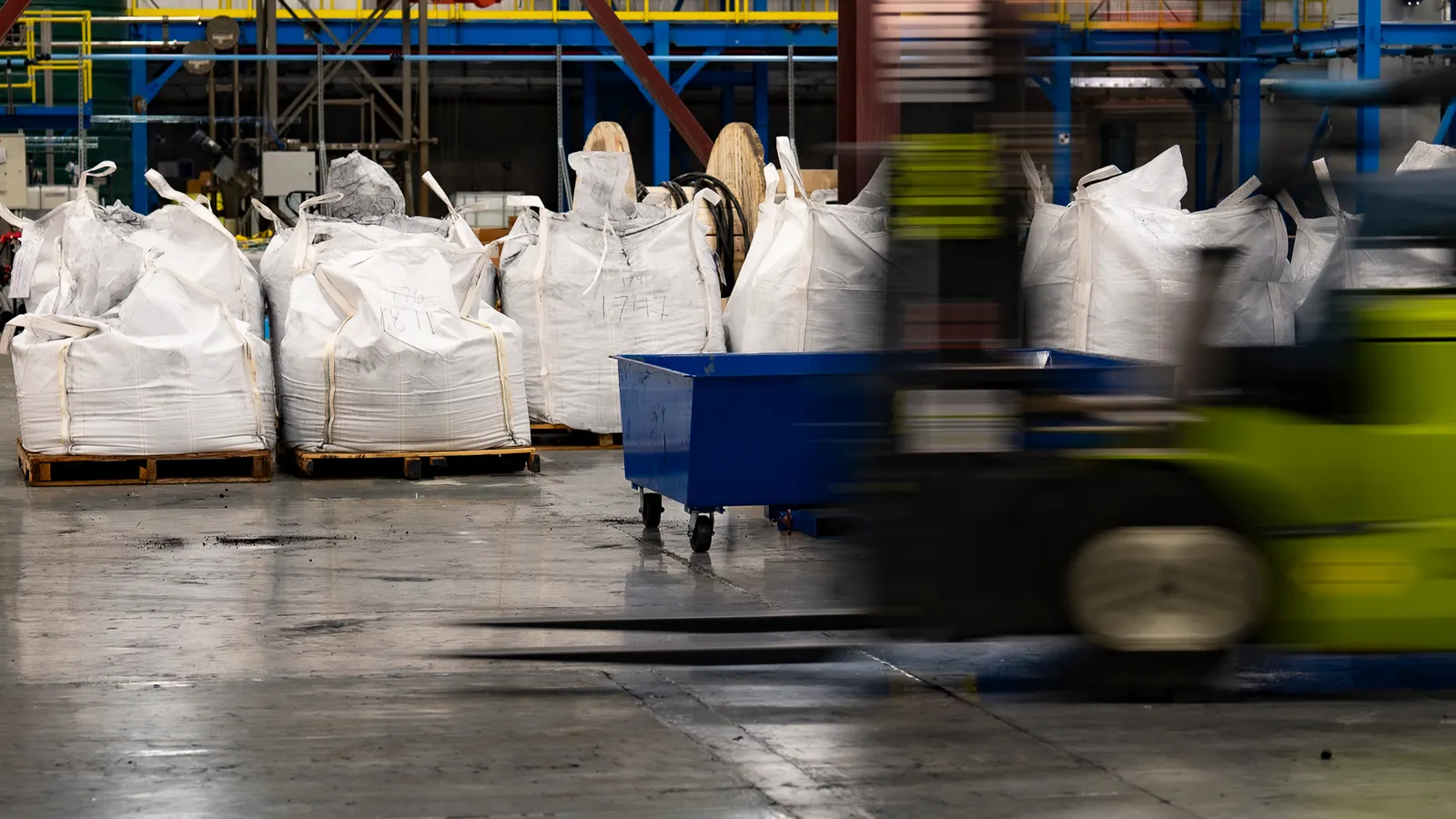
The US government has granted American Battery Technology Company (ABTC) an export licence to ship up to $100 million worth of "black mass"—the mineral-rich powder generated from shredded batteries—to international markets. This regulatory approval highlights a growing structural imbalance in the United States, where battery collection and shredding infrastructure has expanded far more rapidly than domestic downstream refining capacity.
This bottleneck is a familiar challenge within the wider circular economy. When upstream collection and primary processing outpace domestic refining or compounding capacity, transboundary trade becomes essential to prevent material stockpiling. A very similar dynamic governs the European polymer sector, where UK plastic waste collection consistently outstrips domestic reprocessing infrastructure, necessitating export routes to advanced recycling hubs like Türkiye.
For UK waste managers and Turkish polymer recyclers, the US battery situation serves as a reminder of how regulatory compliance dictates global waste flows. As governments tighten transboundary shipment rules to retain critical resources or prevent pollution, exporters of all recyclable materials—including plastics—must navigate increasingly complex permit regimes. Turkish recyclers relying on imported feedstocks must remain aware that originating countries may eventually restrict exports once their domestic downstream capacity matures.
The practical takeaway for the recycling sector is the necessity of preparing for stricter international standards on semi-processed waste streams. UK exporters should focus on upgrading sorting and pre-treatment processes to ensure compliance with tightening export regulations, whilst Turkish processors should secure long-term feedstock agreements to hedge against future domestic supply mandates in export nations.