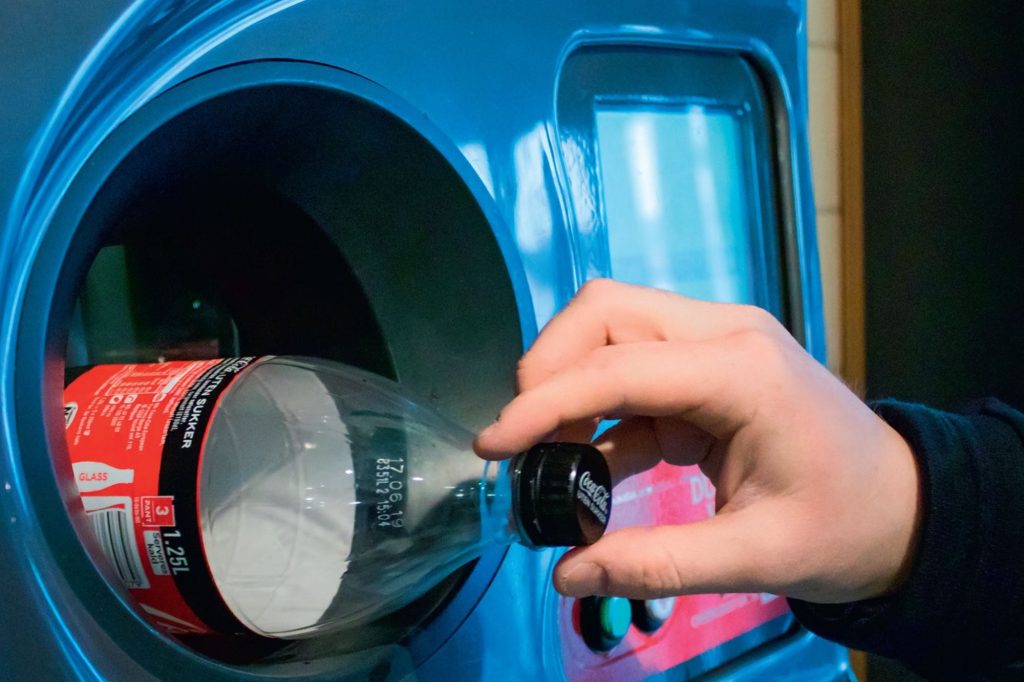
The United Kingdom has officially entered the final countdown toward the implementation of its long-awaited Deposit Return Scheme (DRS), scheduled to go live on 1 October 2027. With the legislative framework now established, retailers and waste management operators are accelerating their infrastructure planning to accommodate the return of billions of single-use drinks containers.
The DRS aims to incentivise consumers to recycle by placing a small, refundable deposit on plastic beverage bottles (primarily PET) and metal cans. For the UK waste sector, this represents a structural shift. Currently, a significant portion of these high-value polymers is collected through household kerbside recycling, often processed by Materials Recovery Facilities (MRFs). The transition to a DRS model will divert these clean, food-grade streams directly from retail return points to dedicated sorting hubs, drastically reducing contamination.
For UK packaging converters and Turkish recyclers, this regulatory milestone will reshape the polymer supply chain. Turkish recycling plants rely heavily on imported plastic scrap and clean post-consumer baled feedstock from the UK to produce high-quality rPET and HDPE. Once the DRS is operational, the UK is expected to retain a higher volume of its domestic food-grade PET to meet local recycled content mandates, potentially tightening the export market for premium bottle bales. Conversely, the overall quality of the remaining exported fractions may improve as contamination rates drop, offering Turkish processors more consistent feedstock.
Practical Takeaway:
UK waste companies must audit their future municipal contract yields to account for the loss of high-value PET bottles from kerbside bins. Meanwhile, Turkish recyclers should begin diversifying their feedstock sourcing or establish direct partnerships with UK DRS operators to secure long-term access to the newly clean, high-yield rPET streams before the 2027 deadline.