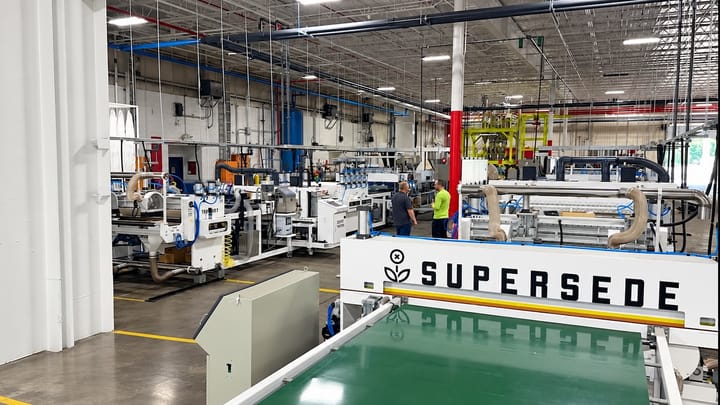
US-based manufacturer Supersede has opened a new production facility in Bristol, Indiana, dedicated to manufacturing engineered structural materials from recycled polypropylene (PP). The plant will supply the recreational vehicle (RV) industry, offering a rot-resistant, lightweight alternative to traditional plywood.
This development underscores a broader global trend: the transition of recycled polyolefins from low-grade, downcycled applications into highly engineered, structural components. Historically, recycled PP has faced challenges regarding consistency and mechanical performance, often limiting its use to non-structural or thick-walled items. By compounding recycled PP to meet the rigorous demands of the transport sector, this project demonstrates that post-consumer and post-industrial PP can successfully displace virgin materials in demanding structural environments.
For UK waste management firms and Turkish recyclers, this shift represents a significant market opportunity. As the UK packaging tax and EU circular economy mandates drive up the demand for high-quality recyclates, Turkish compounders are well-positioned to supply high-specification recycled PP compounds to European automotive, construction, and industrial sectors. To capitalise on this, recyclers must invest in advanced sorting and compounding technologies to guarantee the precise melt flow index and impact strength required for structural applications.
Practical Takeaway: Recyclers and converters should look beyond basic packaging-grade pellets. Developing bespoke, additive-modified recycled PP compounds for structural or outdoor applications can yield higher margins and secure long-term supply contracts, insulating businesses from the volatility of the commodity packaging market.