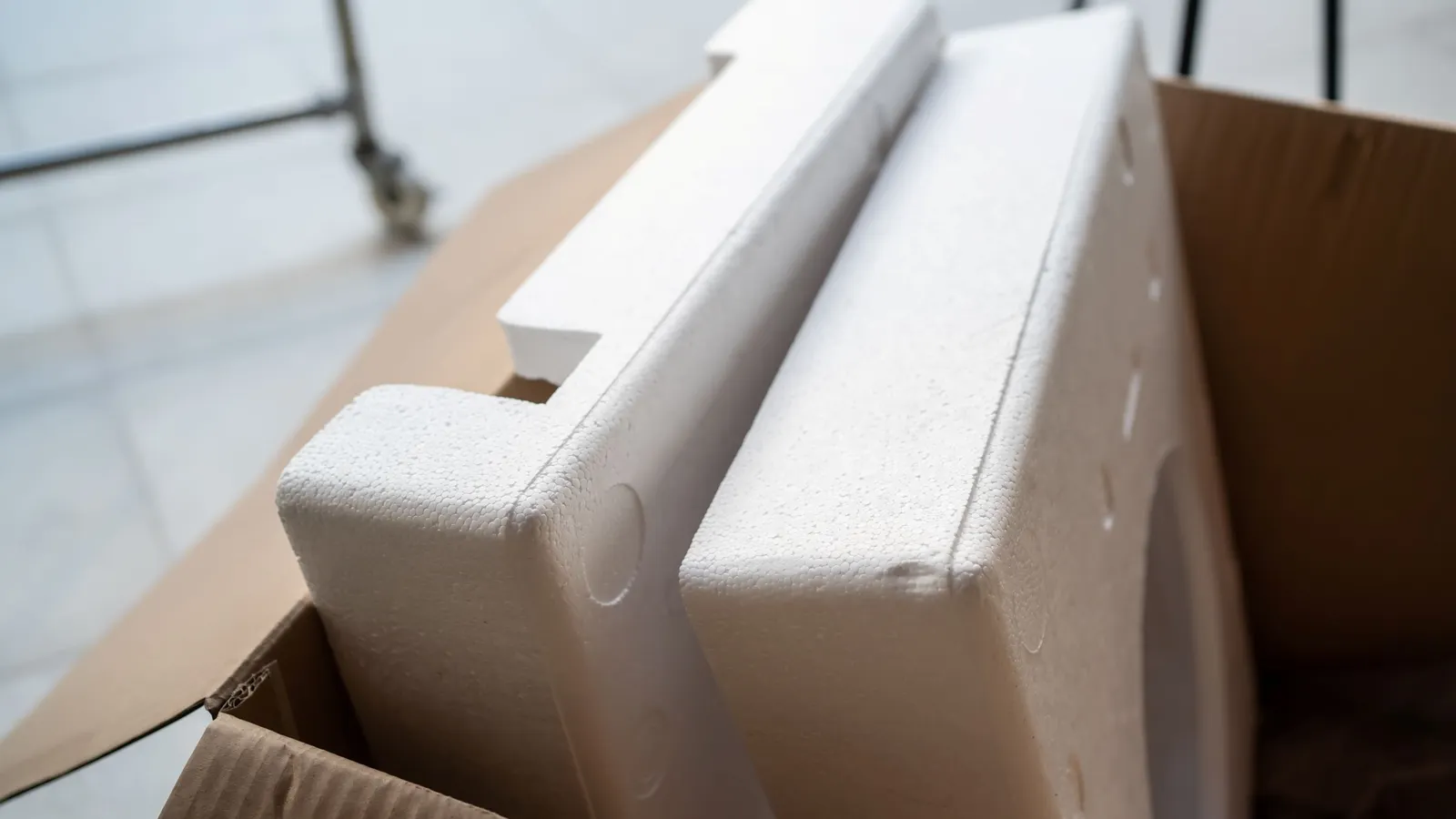
The US Plastics Pact has formally removed transport and protective expanded polystyrene (EPS) from its problematic and unnecessary materials list. This marks the first occasion that pact organisers have delisted a polymer stream since the framework was established four years ago, and forms part of an ongoing review into circular packaging definitions.
Industrial and transport streams separated from food packaging
The decision reflects a growing consensus regarding the differing collection and processing realities of consumer versus transport EPS. While post-consumer food-service containers and loose fill remain prone to heavy organic contamination and prohibitively low bulk density, industrial transport packaging—such as moulded blocks protecting electronics, appliances, and automotive components—is typically collected clean in commercial back-of-store environments.
Over recent years, investment in cold compaction and thermal densification equipment at distribution hubs has enabled high-yield mechanical recycling routes. Reclaiming clean secondary polystyrene (rPS) from these consolidated transport streams has demonstrated technical and economic feasibility, justifying the removal of blanket phase-out targets for commercial protective formats.
Implications for UK and Turkish recyclers
For UK waste managers and Turkish plastics reprocessors, this regulatory recalibration mirrors long-standing commercial practices across European supply chains. Clean transport EPS constitutes a reliable feedstock for Turkish compounding and extrusion facilities producing high-performance insulation boards (XPS) and technical mouldings.
From a policy and compliance perspective, the distinction reinforces arguments being made across the UK and the EU under Packaging and Packaging Waste Regulation (PPWR) negotiations. Clear segregation of commercial transport packaging allows UK compliance teams to defend the circular credentials of rigid protective foam, avoiding punitive Extended Producer Responsibility (EPR) fee tiers applied to non-recyclable materials.
Practical takeaway
Waste management operators handling high volumes of transit packaging should maintain strict on-site segregation of clean transport EPS from general mixed waste. Investing in local compaction units reduces transport costs and preserves the material quality required to command premium prices from Turkish and European rPS converters.