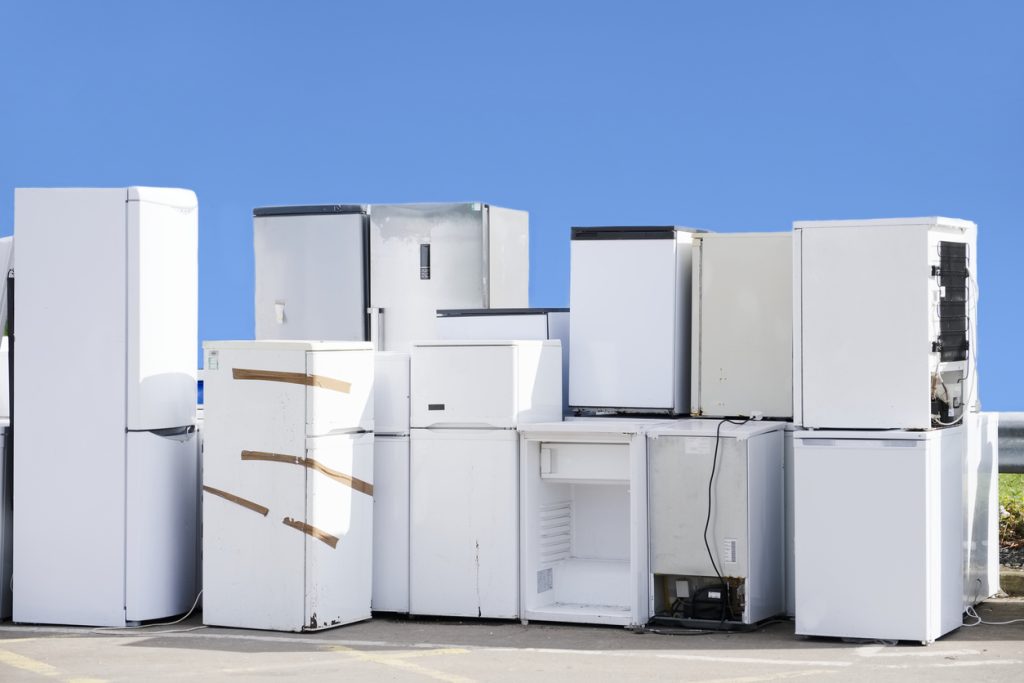
The UK is currently facing a significant backlog in domestic cooling appliance recycling, prompting compliance scheme Ecogenesys to utilise temporary storage and export routes to manage the surplus. While the scheme operator expects the immediate crisis to ease, it has highlighted a critical deficit in domestic processing capacity and called for urgent investment in new infrastructure.
Cooling appliances, such as fridges and freezers, require specialised recycling facilities to safely capture hazardous greenhouse gases and recover valuable materials, including technical polymers like polystyrene (PS) and acrylonitrile butadiene styrene (ABS). When domestic capacity falls short, the reliance on export markets increases. This not only raises compliance costs for UK producers under the Waste Electrical and Electronic Equipment (WEEE) regulations but also diverts valuable polymer feedstocks away from local circular supply chains. For the wider recycling sector, it underscores the vulnerability of relying on limited domestic infrastructure.
For UK waste management companies and compliance schemes, this capacity crunch means navigating volatile export logistics and potentially higher compliance fees to meet recycling targets. For recyclers, particularly those processing technical plastics, the export of these appliances represents a missed opportunity to capture high-quality rigid polymers domestically. Furthermore, shipping bulky waste overseas increases the Scope 3 carbon footprint of the compliance chain, complicating net-zero and carbon reporting efforts for UK stakeholders who are increasingly scrutinised on their environmental impact.
Practical Takeaway: UK waste operators should review their contingency plans for WEEE storage and diversify their downstream partners to mitigate capacity bottlenecks. Meanwhile, recyclers should monitor emerging infrastructure investment opportunities, as the current bottleneck demonstrates a clear market demand for expanded domestic polymer recovery and appliance processing facilities.