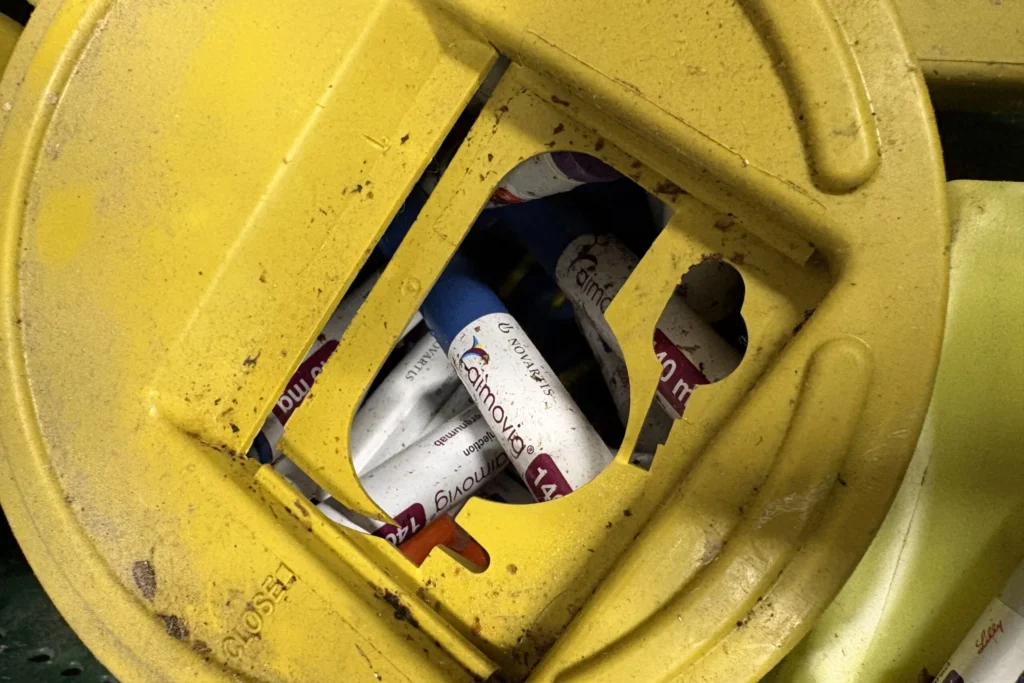
Coventry-based Sherbourne Recycling has issued an operational warning over the improper disposal of weight-loss auto-injector pens in household recycling streams. The operator of the material recovery facility (MRF) reported an emerging challenge from discarded single-use GLP-1 injection devices arriving at its sorting plant, creating health and safety hazards for site personnel.
The rapid rise in prescribed and privately purchased weight-loss medications has led to millions of pre-filled, needle-bearing auto-injector pens entering domestic households. Although these devices require dedicated clinical waste disposal routes—such as pharmacy take-back schemes or local authority healthcare collections—a growing volume is being placed into domestic dry recycling bins. Upon reaching MRFs, embedded sharps present direct needle-stick risks to manual sorting staff and threaten to disrupt automated processing lines.
Beyond immediate workforce safety concerns, the issue highlights the ongoing challenge of composite product contamination in rigid plastic recycling streams. Modern auto-injector pens consist of complex assemblies combining high-impact polystyrene, polypropylene, glass cartridges, and stainless steel needles. When mixed into domestic recycling streams, these items degrade the purity of recovered polymer fractions, increasing sorting costs and potential bale rejections.
For UK waste collectors and international polymer recyclers—including reprocessors importing UK-sorted plastic scrap—input stream purity is critical to maintaining operational margins and compliance. Clinical contamination in material bales risks regulatory non-compliance, shipment rejections, and severe health hazards during manual bale-breaking at receiving plants. Importers and reprocessors must ensure strict supplier audits and verification processes to guarantee that material feeds remain free from medical waste.
Practical takeaway: MRF operators and waste managers must update risk assessments and worker safety protocols regarding sharps, while strengthening inbound quality checks. Reprocessors purchasing UK rigid plastics should confirm that suppliers use advanced sorting systems capable of ejecting dense, composite medical hardware prior to baling.