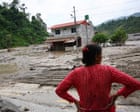
Nepal’s recent demand for $20 million in climate compensation following devastating glacial floods has intensified the global debate over historical emissions and industrial accountability. Speaking after landslides and flash floods caused widespread destruction, Nepal's foreign minister, Shisir Khanal, urged the world’s largest economies to "wake up" and accept shared responsibility for climate-induced disasters. Nepal contributes less than 0.1% of global greenhouse gas emissions but remains highly vulnerable to the impacts of rising global temperatures.
This development highlights the growing momentum behind the "loss and damage" funding mechanisms established at recent UN climate summits. As developing nations bear the brunt of extreme weather, pressure is mounting on industrialised countries to finance mitigation and adaptation efforts. This geopolitical tension is a key driver behind the rapid tightening of environmental regulations across Europe and the UK.
For UK waste management firms, packaging converters, and Turkish recyclers, this macro-level climate pressure translates directly into regulatory and financial realities. To fund climate commitments and drive domestic decarbonisation, European governments are expanding carbon pricing mechanisms and enforcement. The plastics and recycling sectors are increasingly being brought into these frameworks. For instance, the UK’s Emissions Trading Scheme (ETS) is set to expand to waste incineration, whilst the EU’s Carbon Border Adjustment Mechanism (CBAM) signals a future where imported materials must account for their full carbon footprint.
Consequently, Turkish recyclers exporting to the UK and Europe must prepare for a business environment where carbon transparency is non-negotiable. Demonstrating the low-carbon profile of recycled polymers compared to virgin resins will become essential for maintaining market access.
The practical takeaway for the sector is clear: carbon accounting is no longer optional. Recyclers and converters must invest in robust life-cycle assessments (LCAs) to quantify the exact emissions savings of their products. As the "polluter pays" principle expands from global diplomacy to local supply chains, verified low-carbon credentials will serve as a primary competitive advantage.