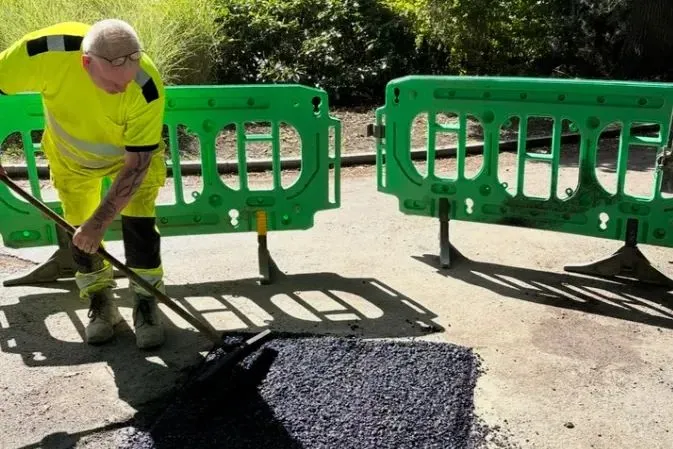
Maidstone Borough Council has initiated a trial using a low-carbon, textile-derived product to repair potholes and paths within its public parks. The initiative aims to reduce municipal carbon emissions while supporting circular economy principles by diverting non-recyclable textile fibres from disposal routes into durable infrastructure applications.
The trial represents a growing trend among UK local authorities to integrate secondary materials into civil engineering and public works. Traditionally, road and path maintenance relies heavily on carbon-intensive asphalt and bitumen. By substituting these with binders and aggregates derived from processed waste textiles—which often contain significant proportions of synthetic polymers like polyester—the council seeks to lower the embodied carbon of its maintenance operations.
For UK waste management companies and polymer recyclers, this development highlights the expanding market for blended and hard-to-recycle synthetic textile fractions. As municipal procurement policies increasingly mandate low-carbon and circular material choices, waste operators who can supply consistent, pre-processed polymer-textile blends will find new high-volume outlets outside traditional packaging markets. Furthermore, understanding how these composite materials perform in real-world infrastructure is crucial for recyclers tracking the long-term lifecycle and carbon-offset potential of diverted waste streams.
A key practical takeaway for the recycling sector is the necessity of aligning processing capabilities with municipal infrastructure specifications. To capitalise on these emerging public-sector markets, recyclers must ensure that their recovered polymer and textile outputs meet strict technical standards for durability and environmental safety, thereby positioning circular materials as viable, low-risk alternatives to virgin fossil-based feedstocks.