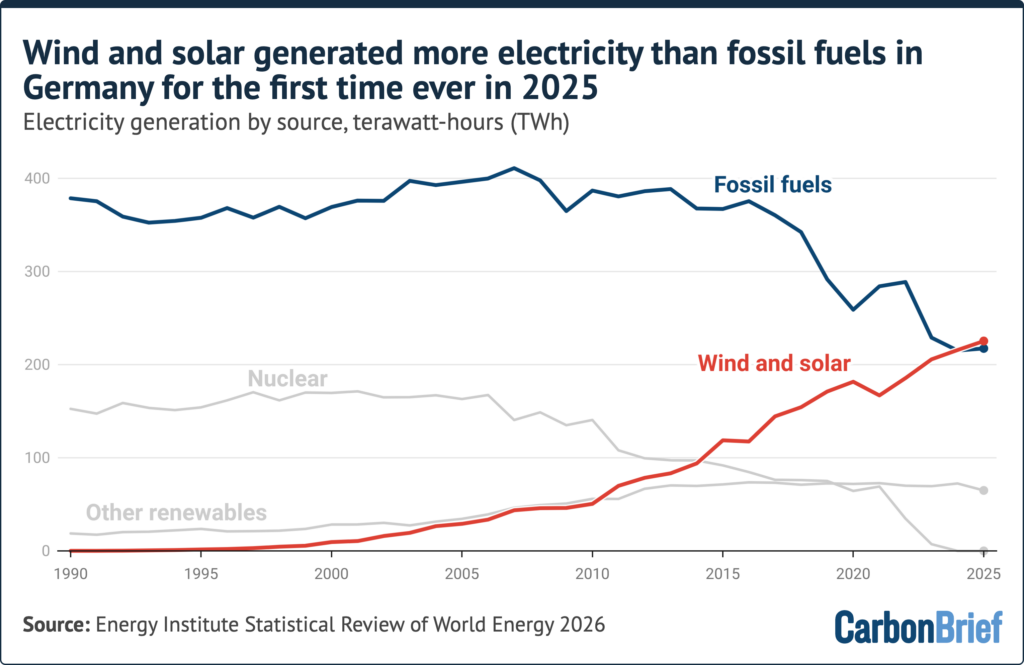
In 2025, Germany reached a milestone in its clean energy transition, generating more electricity from wind and solar power than from fossil fuels for the first time on record. According to an analysis published by Carbon Brief, rapid expansion in photovoltaic capacity alongside steady offshore wind generation pushed combined solar and wind output past coal and gas across the full annual grid mix.
This shift reflects a broader structural realignment across European power markets. As coal-fired generation declines and grid-scale storage capacity expands, the carbon intensity of electricity in major European industrial hubs continues to fall. For energy-intensive sectors, grid decarbonisation directly influences the embedded emissions profile of manufactured products.
Why It Matters for Industry
Energy represents one of the primary operational overheads for mechanical and chemical recycling facilities. As regional grids decarbonise, the indirect carbon footprint—classified under Scope 2 emissions—associated with processing waste plastics drops significantly. Processing facilities situated in jurisdictions with rapidly cleaning power grids gain a distinct commercial advantage when supplying low-carbon recycled polymers to global consumer brands.
Furthermore, the transition highlights changing dynamics in European industrial energy costs. While high renewable penetration depresses wholesale power prices during peak output hours, grid balancing fees and network investment surcharges continue to influence total energy costs for industrial users.
Impact on UK–Türkiye Plastics Sector
For UK packaging converters and Turkish polymer recyclers exporting to European Union markets, tracking grid decarbonisation across key trading partners is essential for carbon accounting and market positioning.
Under evolving EU climate disclosures and brand sustainability commitments, buyers increasingly demand granular Life Cycle Assessments (LCAs) for recycled resins, including rPET, HDPE, and PP. As the European power grid becomes cleaner, domestic EU recyclers benefit from a lower baseline carbon footprint. To remain competitive, UK and Turkish processing plants operating on higher-carbon national grids may need to invest in on-site solar generation or secure direct renewable Power Purchase Agreements (PPAs) to maintain low carbon-intensity scores for their recycled products.
Practical Takeaway
Recyclers and converters should review their Scope 2 carbon accounting protocols and audit energy suppliers. Securing verifiable renewable energy sources will help maintain competitive LCA metrics as European buyers integrate embedded emissions into their material procurement decisions.