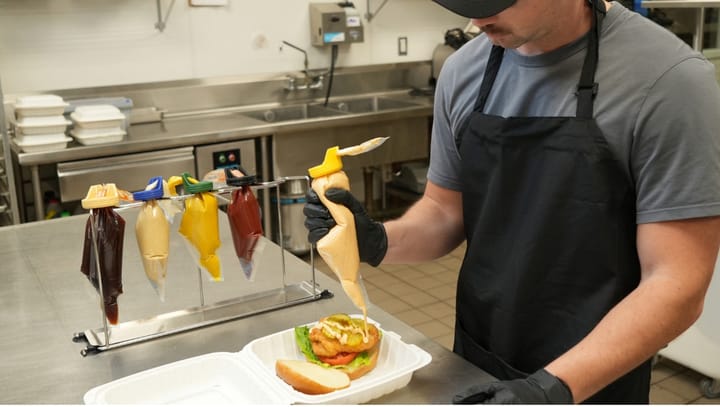
The adoption of pre-filled flexible pouches in the foodservice sector, exemplified by Sealed Air’s new Cryovac ZeroPrep range, highlights a persistent tension in the packaging value chain: the trade-off between operational efficiency and circular economy goals. Designed to replace traditional rigid squeeze bottles for condiments, these pouches aim to minimise food residue, lower transport emissions, and improve hygiene.
However, this shift from rigid to flexible formats complicates the waste management landscape. Rigid condiment bottles, typically manufactured from high-density polyethylene (HDPE) or polypropylene (PP), are widely collected and relatively straightforward for mechanical recyclers to process into high-quality secondary resins. In contrast, flexible pouches often rely on multi-layer barrier films to preserve food safety. These multi-material laminates are technically difficult to separate and recycle, frequently ending up in energy recovery or landfill.
For UK waste companies and Turkish recyclers, this trend presents distinct operational and financial hurdles. In the UK, the roll-out of Extended Producer Responsibility (EPR) means packaging converters will face higher fees for introducing hard-to-recycle flexible plastics into the market. UK waste managers must also navigate increasingly complex sorting processes to segregate flexible films from rigid streams.
For Turkish recyclers, who import significant volumes of UK polymer waste, the influx of multi-layer flexibles reduces the yield of clean, single-polymer streams. Because Turkish facilities focus heavily on mechanical recycling to produce high-value PP and PE pellets, flexible barrier pouches offer little economic value and increase disposal costs for residual process waste.
The practical takeaway is that while flexible pouches offer immediate carbon and food-waste reductions, packaging converters must anticipate stricter regulatory penalties. Future designs must prioritise mono-material constructions that align with evolving recycling infrastructure in both the UK and destination processing markets like Türkiye.