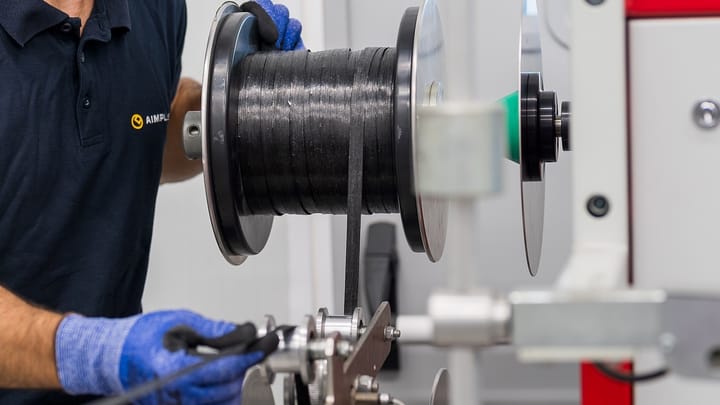
The EU-funded Forest project has successfully developed lightweight biocomposites designed for the automotive, aerospace, and public transport sectors. By combining bio-based resins and recycled carbon fibres, the initiative has achieved weight reductions of up to 35% in structural components compared to conventional materials, whilst fully maintaining industry safety and performance standards.
Led by a consortium of European research partners, the project aims to decarbonise the transport sector by replacing fossil-fuel-derived plastics and heavy metals with circular alternatives. The newly developed materials utilise agricultural waste and recycled carbon inputs, aligning with the EU’s broader circular economy goals and upcoming end-of-life vehicle regulations.
Why it matters
For the plastics and recycling sectors, this development represents a significant step forward in high-performance material substitution. Traditionally, lightweighting in transport has relied on virgin polymers or carbon-intensive composites that are difficult to recycle. The Forest project demonstrates that bio-based and recycled content can meet stringent mechanical requirements, opening up new high-value markets for recycled feedstocks.
Relevance to our readers
For UK waste companies and Turkish recyclers, the commercialisation of such biocomposites signals a shift in the types of technical plastics entering the waste stream in the coming decade. As automotive manufacturers face stricter Scope 3 emissions reporting and recycled-content mandates, demand for high-purity recycled carbon fibres and bio-resins will rise. Recyclers who invest in sorting and processing capabilities for advanced composites will be well-positioned to supply these emerging circular supply chains, helping partners meet carbon reduction targets.
Practical takeaway
Converters and recyclers should monitor the scaling of bio-synthetic hybrids, as these materials will increasingly compete with traditional engineering polymers. Preparing processing lines to handle complex, multi-material biocomposites will be essential to maintaining competitive advantage as transport supply chains decarbonise.