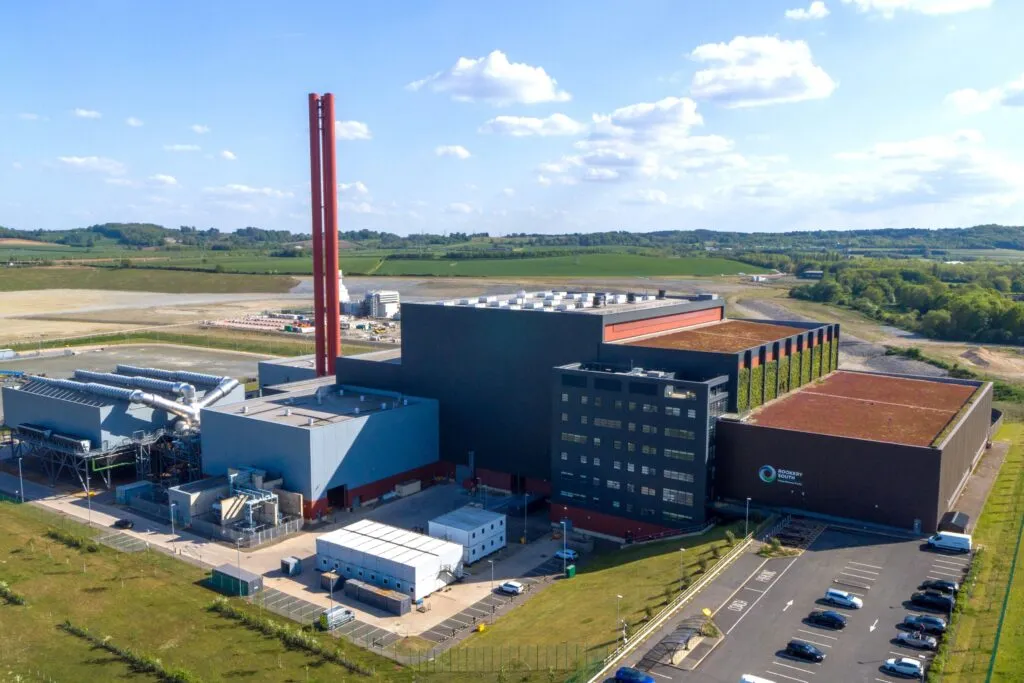
Energy-from-waste (EfW) operator Encyclis has assumed full ownership of the Rookery South EfW facility in Bedfordshire. This consolidation follows similar buyouts by the company, cementing its position as a major player in the UK’s waste-to-energy infrastructure. The facility, which processes residual municipal and commercial waste, plays a significant role in diverting non-recyclable materials from landfill.
The consolidation of EfW assets under major operators like Encyclis comes at a critical juncture for the UK waste sector. The UK government is progressively tightening policies around residual waste, with the planned inclusion of EfW facilities in the UK Emissions Trading Scheme (ETS) from 2028. As carbon costs are phased in, the financial dynamics of incinerating plastic-heavy residual waste will shift dramatically, driving up gate fees for mixed waste and incentivising greater sorting at source.
For UK waste companies and packaging converters, this consolidation highlights the maturing and increasingly corporate nature of the UK's residual waste infrastructure. As EfW operators prepare for carbon pricing, they will increasingly penalise fossil-derived plastics in their feedstock to manage their emissions liabilities. This policy pressure will inevitably push more recyclable polymers out of the residual stream and into the recycling market. For Turkish recyclers relying on UK feedstock, this shift could ultimately improve the volume and quality of segregated plastic waste exported under Annex VII, as UK waste managers seek to avoid rising incineration surcharges.
As a practical takeaway, UK waste firms should audit their residual streams now to extract recyclable plastics before rising EfW carbon costs impact disposal fees, while packaging converters must prepare for a market where recycled content is increasingly prioritised over energy recovery.