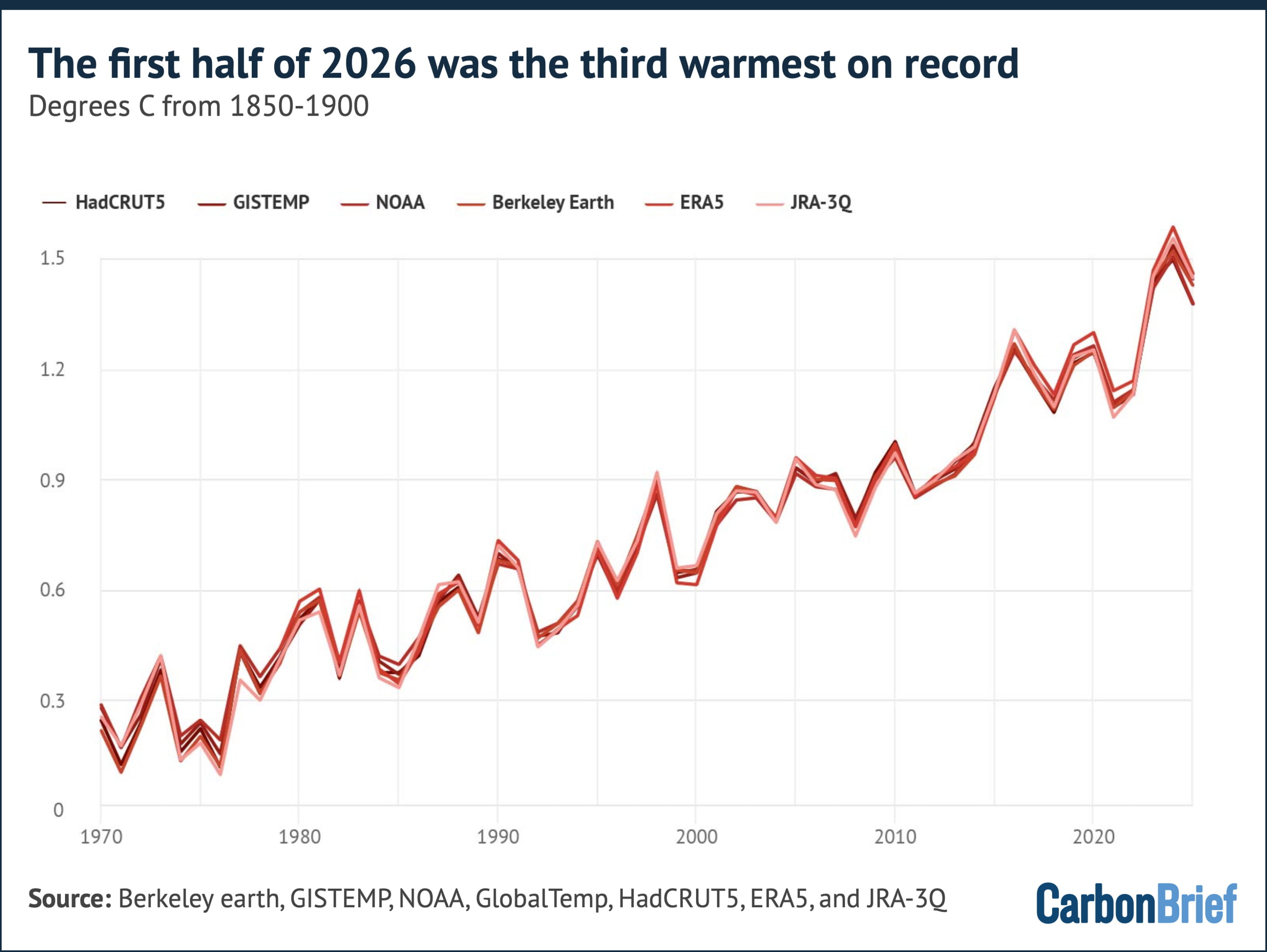
Mid-year climate indicators show a rapidly developing El Niño phenomenon in the Pacific Ocean, significantly increasing the probability that 2026 will set a new global temperature record. According to analysis by Carbon Brief, atmospheric and oceanic observations point to swift thermal intensification. This shift accelerates broader warming trends, threatening to exacerbate extreme weather patterns across Europe, the Mediterranean, and global maritime trade corridors.
The swift acceleration of El Niño serves as a clear indicator of escalating climate volatility. Rising global baseline temperatures lead directly to severe local weather disruptions, including prolonged heatwaves, unpredictable precipitation, and heightened strain on electrical infrastructure. For manufacturing and processing sectors, thermal spikes frequently lead to increased operational cooling requirements, higher peak-demand power costs, and potential logistics bottlenecks caused by extreme weather events.
For UK waste managers, packaging converters, and Turkish plastic recyclers, these climate patterns present distinct operational and cost challenges. Mechanical recycling operations—particularly wash lines for rPET, HDPE, and LDPE—depend heavily on stable power grids and uninterrupted water supply. In Türkiye, intense summer heatwaves routinely strain regional power networks and increase local water stress, directly influencing processing overheads and resource allocation. In the UK, elevated summer temperatures place additional load on factory cooling systems and warehouse storage management. Beyond immediate operational impact, rising climate instability highlights the importance of accurate carbon reporting and Scope 1–3 emissions tracking as European supply chain compliance rules tighten.
Practical takeaway: Recycling operators and converters should audit their water and energy resilience. Investing in closed-loop water filtration systems, onsite renewable generation, and heat mitigation plans will help maintain operational continuity and control processing costs during extreme thermal events.