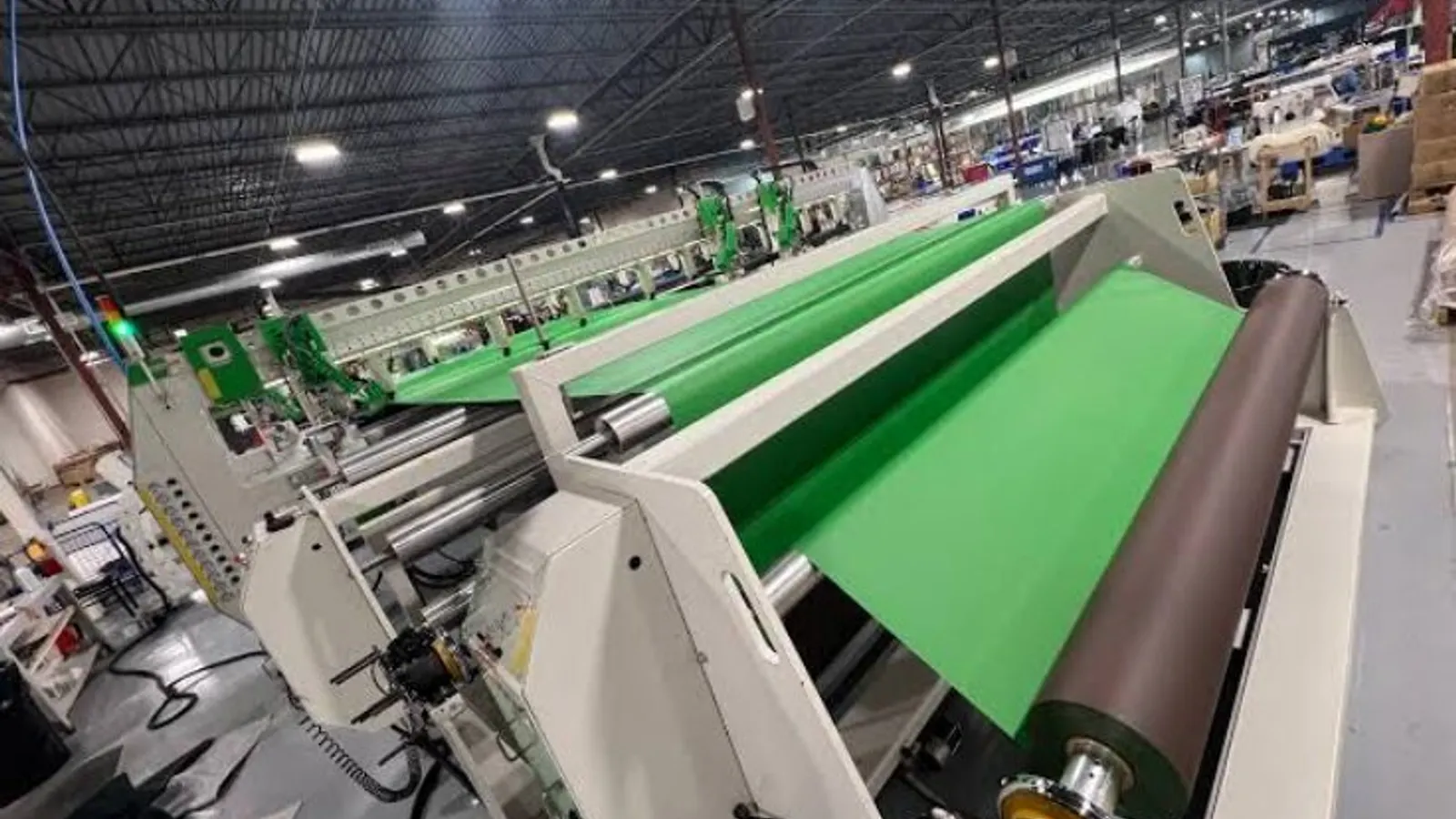
Circular economy investment firm Closed Loop Partners has provided catalytic loan financing to Renegade Plastics, a US-based manufacturer producing recyclable polypropylene (PP) technical fabrics. The capital injection will fund a new manufacturing facility designed to scale up the commercial availability of polyolefin-based coated textiles, which serve as circular alternatives to traditional polyvinyl chloride (PVC) and polyurethane (PU) coated materials.
Why it matters
Textiles and technical coated fabrics represent one of the most challenging waste streams in the modern plastics economy. Conventional coated fabrics typically fuse mixed polymers with heavy additives, rendering them virtually impossible to recycle mechanically and consigning large volumes to landfill or incineration.
By contrast, Renegade Plastics utilises mono-material polypropylene structures. This design allows industrial products such as tarpaulins, event signage, agricultural covers, and banners to be recycled directly back into high-grade polypropylene resins at end-of-life. Strengthening manufacturing capacity for mono-material polyolefin textiles builds reliable demand for recycled PP feedstock while lowering Scope 3 emissions across industrial supply chains.
What it means for UK and Turkish plastics operators
For UK waste management firms, packaging converters, and Turkish reprocessors, the commercialisation of fully recyclable polypropylene fabrics highlights the broader transition towards mono-material design. UK converters and industrial specifiers face growing pressure under extended producer responsibility frameworks and corporate carbon reporting rules to eliminate hard-to-recycle composite materials.
At the same time, Turkish recycling facilities—which maintain significant mechanical recycling infrastructure for polyolefins—are well-positioned to process mono-material PP streams as international adoption grows. Replacing PVC-coated fabrics with polypropylene reduces contamination in recycling streams, lowers processing costs, and yields higher-grade secondary polymers for European manufacturing.
Practical takeaway
Converters and industrial waste handlers should evaluate their technical textile supply chains to identify composite or PVC materials that can be substituted with mono-material polypropylene alternatives. Transitioning to mono-material PP simplifies end-of-life handling, improves carbon audit metrics, and ensures compliance with tightening circular economy regulations.