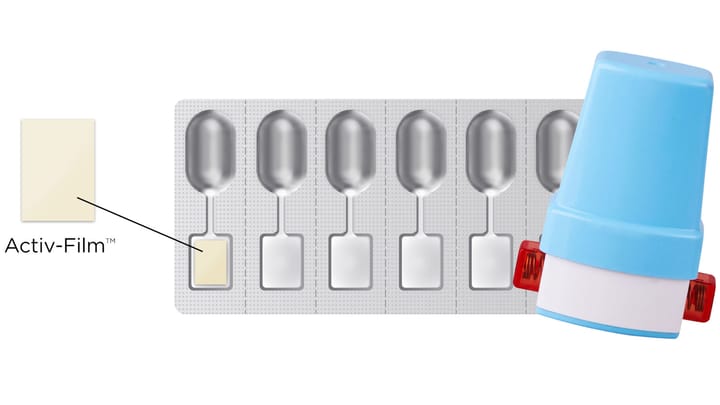
Aptar Pharma has introduced its Activ-Film technology into blister packaging designed for dry powder inhalers (DPIs). This development aims to protect moisture-sensitive inhaled therapies by creating a controlled internal microenvironment. While the technology represents a significant advancement for pharmaceutical efficacy and patient safety, it highlights an ongoing tension within the plastics sector: the conflict between high-performance functional packaging and circular economy objectives.
The packaging utilizes integrated active components to manage moisture and gas ingress, ensuring drug stability without requiring bulky secondary packaging. However, for UK waste management firms and Turkish plastics recyclers, such highly engineered, multi-material structures present a familiar obstacle. Active packaging films typically bond different polymer layers with desiccants or scavengers, rendering them incompatible with standard mechanical recycling infrastructure.
This development matters because medical and pharmaceutical packaging is under increasing scrutiny. While medical plastics have historically enjoyed exemptions from standard recycling mandates due to safety concerns, evolving Extended Producer Responsibility (EPR) schemes in the UK and stricter circular economy policies across Europe are forcing a re-evaluation of all plastic waste streams. As drug delivery systems become more sophisticated, the volume of complex, unrecyclable technical plastics entering the waste stream will rise, potentially complicating post-consumer sorting.
For our readers, particularly UK converters and Turkish recyclers processing technical polymers, this trend underscores the necessity of advanced sorting and chemical recycling. Mechanical recyclers cannot process these composite materials without risking batch contamination. Consequently, converters must work closely with pharmaceutical clients to explore mono-material alternatives where clinically viable, while recyclers must prepare for a future where chemical recycling or specialized thermal recovery remains the only feasible route for active medical plastics.