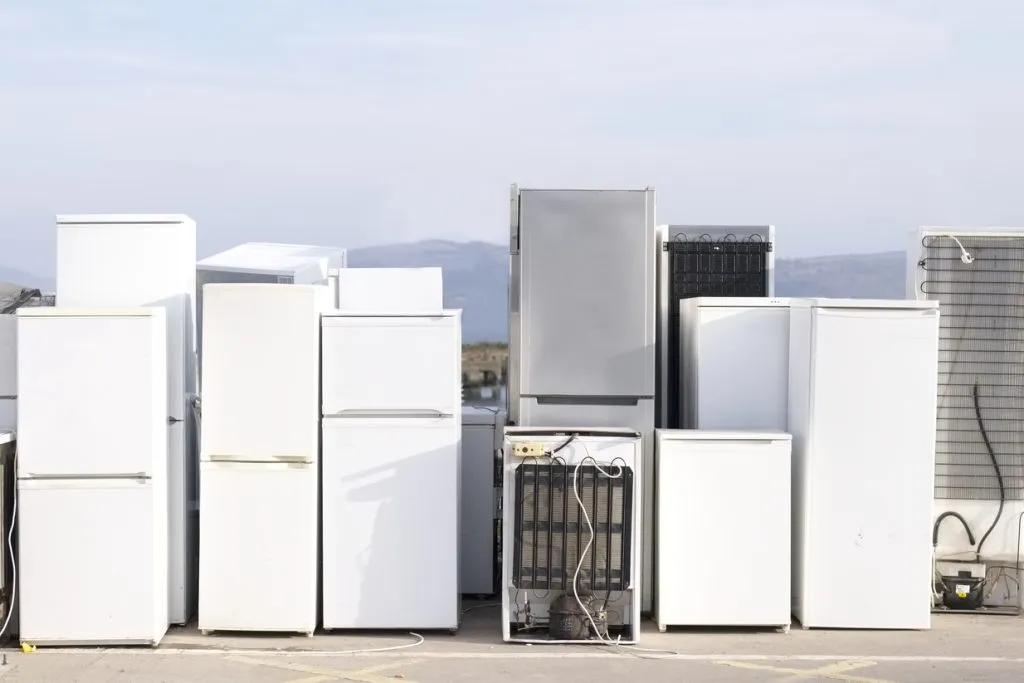
Research conducted by the UK’s Local Government Association (LGA) has underscored severe financial and operational pressures facing local authorities over the collection and processing of waste fridges and freezers. The findings intensify calls from municipal leaders for appliance manufacturers and suppliers to contribute directly to the rising costs of end-of-life cooling equipment disposal.
Mounting Financial Burden on Local Authorities
End-of-life refrigeration units represent one of the most complex municipal waste streams. Beyond the necessity of safely capturing legacy ozone-depleting substances and volatile fluorocarbons, treating these appliances requires specialised dismantling to separate structural polymers—principally high-impact polystyrene (HIPS), acrylonitrile butadiene styrene (ABS), and polyurethane foam—from metals and compressors. Municipal budgets are strained by elevated logistics costs, strict environmental safety mandates, and shifting secondary material values, leaving local councils to absorb a disproportionate share of the processing burden.
Why Policy Reform is Accelerating
The LGA survey adds momentum to the broader overhaul of the UK Waste Electrical and Electronic Equipment (WEEE) regulations and Extended Producer Responsibility (EPR) policy. By pushing for full net-cost recovery models, local authorities aim to rebalance responsibility so that producers fund the genuine end-of-life footprint of their products. Shifting financial accountability upstream encourages eco-design, such as easier disassembly and better material selection, while safeguarding public collection networks.
Implications for UK–Türkiye Trade and Recyclers
For UK waste collection companies, changes in producer responsibility funding could alter contractual arrangements for municipal WEEE sites, potentially unlocking investment for upgraded regional pretreatment facilities. For polymer recyclers and cross-border traders operating between the UK and Türkiye, stricter oversight and better-funded collection streams will improve the volume and consistency of recovered engineering plastics like HIPS and ABS. However, trade participants must ensure complete traceability and audited processing standards to comply with evolving UK and EU regulatory frameworks.
Practical Takeaway
Waste management firms and plastics recyclers active in WEEE streams should review their operational costs and audit compliance pathways today. Aligning with upcoming producer-responsibility requirements will help operators secure high-quality scrap feeds while mitigating regulatory risks.