Image: T.C. Çevre, Şehircilik ve İklim Değişikliği Bakanlığı
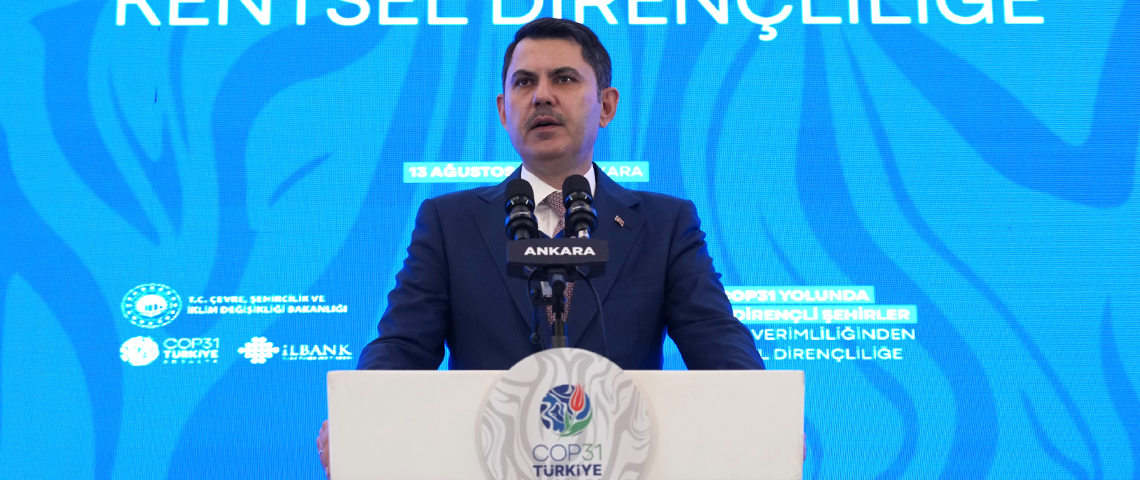
At the recent 'Climate Resilient Cities Summit on the Road to COP31' organized by ILBANK, Turkish Minister of Environment, Urbanisation and Climate Change Murat Kurum outlined the nation’s strategic framework for integrating climate adaptation into urban infrastructure. The summit focused on sustainable urban planning, municipal green investments, and environmental integration within post-earthquake reconstruction projects. Minister Kurum emphasized that "environmental considerations remain integral to every phase" of regional redevelopment efforts across the country.
This initiative marks a broader push by the Turkish government to elevate its national climate profile as it prepares for upcoming international climate negotiations under COP31. By leveraging state investment banks like ILBANK, Türkiye aims to direct public finance toward low-carbon municipal projects, disaster-resilient infrastructure, and modernised waste management systems. The strategy highlights how public funding will increasingly prioritize long-term ecological resilience and resource efficiency across urban centers.
Impact on Waste Management and Circular Compliance
For recyclers and waste managers operating in Türkiye, the ministry's heightened focus on climate resilience signals an inevitable tightening of local environmental regulations and reporting requirements. As municipal climate plans align with national emissions reduction goals, industrial facilities will face greater scrutiny regarding emissions, resource efficiency, and local environmental impact. Recyclers collaborating with local municipalities should expect stricter compliance standards for waste collection, sorting, and processing operations, alongside growing demands for verified carbon footprint documentation.
Practical Takeaway
Turkish recycling businesses should audit their environmental compliance and carbon reporting practices now. Aligning operational standards with national climate resilience targets will be essential for securing municipal waste contracts and accessing green finance initiatives backed by state development institutions.
Reported by T.C. Çevre, Şehircilik ve İklim Değişikliği Bakanlığı — original article
Curated by our editorial team with AI assistance. Sources linked above.