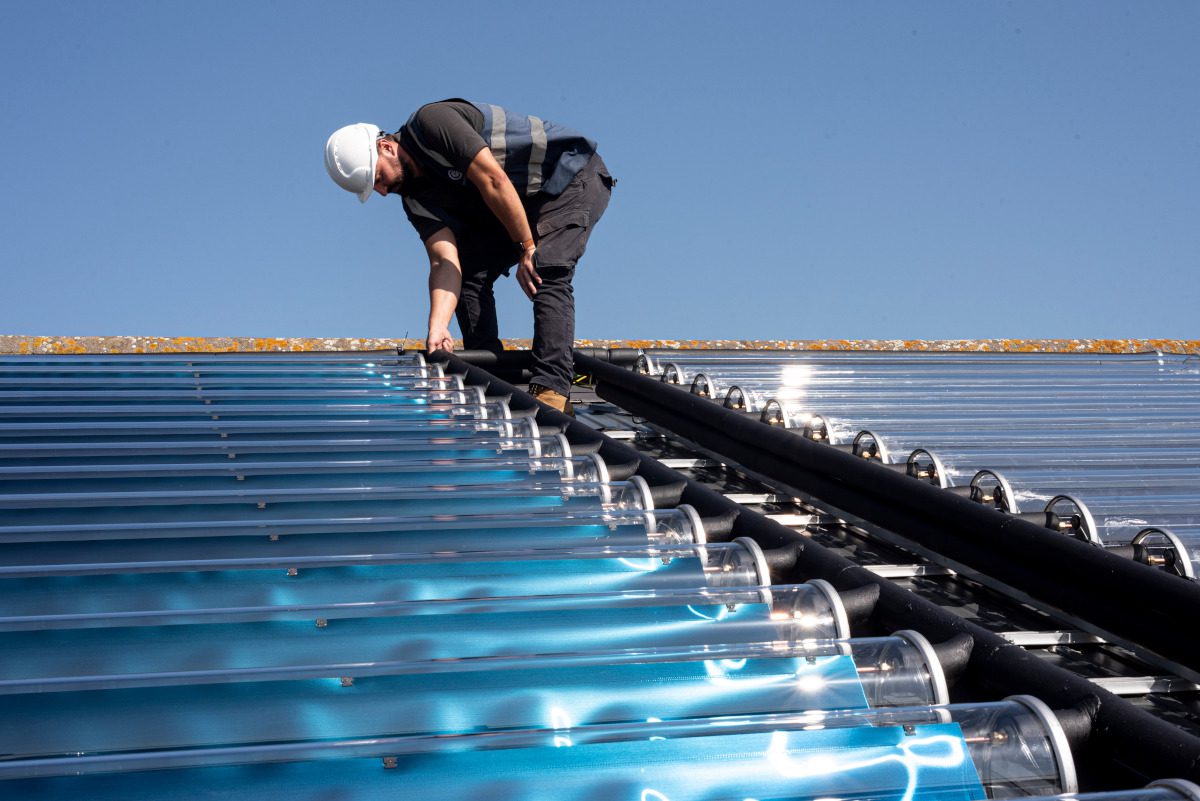
Great British Energy (GBE) and Barclays Climate Ventures have committed £7.5 million in equity backing to UK renewable heat technology firm Naked Energy. The investment will support the establishment of an automated UK manufacturing facility to scale production of high-efficiency solar-thermal and hybrid solar collector systems.
Process heat remains one of the hardest industrial energy requirements to decarbonise, often relying heavily on grid electricity or fossil fuels. Solar-thermal technologies capture solar radiation directly to generate hot water and space heat, offering elevated efficiency levels compared to traditional photovoltaic panels when targeting thermal demand. Scaling domestic production aims to lower technology costs and secure supply chains for clean industrial heat infrastructure across Britain.
Impact on Waste and Recycling Operations
For UK waste management companies and Turkish polymer recyclers operating energy-intensive infrastructure, decarbonising process heat is a growing operational priority. Washing lines, friction washers, hot-wash tanks, and drying systems require continuous thermal energy, representing a major portion of operational expenditure and Scope 1 and 2 emissions profiles.
As brand owners enforce stricter carbon accounting standards across recycled resin supply chains, reprocessors face increasing scrutiny regarding process emissions. Adopting thermal renewable energy helps operators stabilize long-term utility overheads, hedge against energy price volatility, and demonstrate verified carbon reductions required under European and UK sustainability reporting frameworks.
Practical Takeaway
Recycling facility managers auditing site decarbonisation plans should evaluate thermal energy demand separately from electrical loads. Assessing feasibility for solar-thermal pre-heating on wash plants can reduce utility expenditure while improving product carbon footprint metrics ahead of tightening supply chain emissions standards.